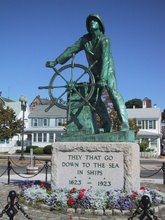
In 1861, soon after the Civil War began, President Lincoln declared a blockade of the rebellious South. It proved to be one of the North's most effective weapons. Owners of several ships seized by the US Navy sued, claiming that the blockade was illegal, because it was an act of war and Congress had not declared a state of war to exist. In The Prize Cases, the Supreme Court upheld the blockade. Writing for the Court, Justice Grier observed that the the war was "a fact which the Court is bound to notice and to know."
Yesterday, a majority of today's Court turned a blind eye to reality (although Justice Kennedy gave a least a nod in its direction), ruling that school assignment plans in Seattle and Louisville are unconstitutional. The four reactionary members of the court would hold that any consideration of race in school assignment violates the Constitution. They had the gall to cite Brown v. Board of Education in their opinion.
Brown was decided because of a problem--racial discrimination. Its declaration that separate but equal is inherently unequal recognized that the law may appear to say one thing while doing another. Segregated schools were said to be equal; that was the rationale that had been adopted to keep the races apart. But--as the Court recognized in 1954--that equality was false. Yesterday, the majority turned that rationale on its head, saying, in Chief Justice Roberts' words, "The way to stop discrimination on the basis of race is to stop discriminating on the basis of race," as a justification for striking down measures to secure integration. The Chief Justice is no fool; he must have known that the court's decision would aid, not cure, racial discrimination.
Conservatives have been very clever in using legalisms--that is, legal principles divorced from the context of the real world--to reverse more than half a century of racial progress in this country. In this effort, they have used the separation between private and public actions to their advantage.
When Brown was decided, segregation was enforced by law. Under the 14th Amendment, government action to cause or enforce distinction on the basis of race is unlawful. Traditional Anglo-American law takes a very different view of private action, however. The classic attitude was, as one wag put it,
Thou shalt not kill, yet needst not strive
Officiously to keep alive.
The much-beloved Prof. Clark Byse, of Harvard Law School, described the common law view this way: "Suppose I'm sitting by the river, smoking my cigar, and a baby comes floating by. As long as I don't flick my ashes in baby's face, I have no obligation to do anything." (In some cases, laws have been passed to impose a duty to act in such situations, but they are rare.)
A person's choice of where to live is private, and the perhaps-natural desire to live with people who look the same as we do, or worship in the same church or synagogue or otherwise seem like us (which some might call prejudice) has been left largely unfettered. (When one person won't sell or rent to a person because of race, national origin, religion or the like, government does get involved, even though those may be private choices.) So, we have come to the point where private choices have led to segregated neighborhoods--often more segregated than they were half a century ago, and the courts take refuge behind the concept of color-blindness to preserve the re-segregation of our schools.
It's not quite as simple as that, actually. Back in the '70's, the Supreme Court was faced with the question of whether a federal court could order city and suburban school districts combined in order to achieve integration. The court decided that that was beyond the purview of federal law. How different things would be today had that case gone the other way.
Is segregation "a fact which the Court is bound to notice and to know?" Today, apparently not. But someday, with different judges, the question may be answered differently. Let's hope so.
Friday, June 29, 2007


Thursday, June 28, 2007
The cost
Each day, The New York Times publishes Names of the Dead, a box inside of which are the names of soldiers whose deaths have been announced by the Defense Department since the last edition. Most days, I read it; spending a few moments looking at the names, ranks, hometowns and units of the dead seems like the least I can do to pay honor to their memories.
Yesterday, I was particularly struck by the number of NCOs who were listed. Among 11 men there were six sergeants; there was also one lieutenant. The Talmud says that to save one life is to save the world; I suppose the reverse of that is that to lose a life is to lose the world. Even if we do not take the humanist position that each life--Iraqi, American, soldier, civilian--is of equal value, the cost that the US is paying in Iraq in terms of damage to our military is horrendous. Non-Com's and junior officers make the services go. Taken together, they are much more important than the much-less-numerous senior officers. (Kipling said, "The backbone of the Army/Is the non-commissioned man.")
We don't need another reason to end our misbegotten adventure in Iraq, but here is one anyway. We are losing the best of us in pursuit of, what?
Yesterday, I was particularly struck by the number of NCOs who were listed. Among 11 men there were six sergeants; there was also one lieutenant. The Talmud says that to save one life is to save the world; I suppose the reverse of that is that to lose a life is to lose the world. Even if we do not take the humanist position that each life--Iraqi, American, soldier, civilian--is of equal value, the cost that the US is paying in Iraq in terms of damage to our military is horrendous. Non-Com's and junior officers make the services go. Taken together, they are much more important than the much-less-numerous senior officers. (Kipling said, "The backbone of the Army/Is the non-commissioned man.")
We don't need another reason to end our misbegotten adventure in Iraq, but here is one anyway. We are losing the best of us in pursuit of, what?
How to be popular
A couple of days ago, I posted a comment on a blog I ran across. The blog in question, What Would John Wayne Do?, is hosted by a firearms enthusiast. WELL, suddenly TONE got comment after comment--all from gun fanciers (I trust that they will not be offended by that term). I haven't counted, but there may be as many comments on that one post as on all the other posts this year.
(While it's nice to be popular, I moderate comments to keep out spam--the policy is to publish anything that isn't defamatory or commercial--so keeping up takes time. And I got drawn into the debate, which took more.)
I wonder, though, why this subject generates so much heat. Given the power of the NRA and other organizations of those who favor a relaxed approach to firearms regulation, the millions of Americans who own guns and the millions of firearms that are in American homes (and on American streets, but that's another subject), why is there such a need to contend so vigorously with even such a mild expression of dissent as mine? (And let's face it, TONE's readership doesn't approach that of The New York Times or the Daily Kos.) I don't question the legitimacy of the positions taken by those who have taken the time to post comments--many of them make good points. But I do question whether the subject is really more important than the other issues that TONE comments on, like the damage done to our constitutional system in the name of a "War on Terror," the Iraq war, corruption in government, the challenge of climate change and the like. To me, the debate over gun regulation is an important issue, but its not the only issue, or even the most important right now.
Ah well, that's what makes horse racing.
(While it's nice to be popular, I moderate comments to keep out spam--the policy is to publish anything that isn't defamatory or commercial--so keeping up takes time. And I got drawn into the debate, which took more.)
I wonder, though, why this subject generates so much heat. Given the power of the NRA and other organizations of those who favor a relaxed approach to firearms regulation, the millions of Americans who own guns and the millions of firearms that are in American homes (and on American streets, but that's another subject), why is there such a need to contend so vigorously with even such a mild expression of dissent as mine? (And let's face it, TONE's readership doesn't approach that of The New York Times or the Daily Kos.) I don't question the legitimacy of the positions taken by those who have taken the time to post comments--many of them make good points. But I do question whether the subject is really more important than the other issues that TONE comments on, like the damage done to our constitutional system in the name of a "War on Terror," the Iraq war, corruption in government, the challenge of climate change and the like. To me, the debate over gun regulation is an important issue, but its not the only issue, or even the most important right now.
Ah well, that's what makes horse racing.
Tuesday, June 26, 2007
Money talks
"They say money talks. I thought that was the problem."
Prof. Paul Freund, commenting on Buckley v. Valeo,1976.
Buckley v. Valeo was the case in which the Supreme Court first decided that the wealthy can spend their own money to further their political campaigns without let or hindrance. The central idea underlying that case--that money equals speech--has led to the political situation today, where wealth dominates our politics.
But does the First Amendment really empower the wealthy or organized pressure groups by protecting their right to spend money? The Amendment says that speech shall be free; it does not say that some people have the right to drown out others, nor does it hold that some speech is more valuable than others.
Would it violate the First Amendment if reasonable limits applied to all individuals, whether they are contributing to someone else's campaign or supporting their own? As long as the limits were the same for all, how would freedom of speech be impeded?
"Conservative" jurists like to concentrate on the text of the constitutional or statutory provision at issue. It's time to look at the First Amendment that way--at what it says, and at what it doesn't.
Prof. Paul Freund, commenting on Buckley v. Valeo,1976.
Buckley v. Valeo was the case in which the Supreme Court first decided that the wealthy can spend their own money to further their political campaigns without let or hindrance. The central idea underlying that case--that money equals speech--has led to the political situation today, where wealth dominates our politics.
But does the First Amendment really empower the wealthy or organized pressure groups by protecting their right to spend money? The Amendment says that speech shall be free; it does not say that some people have the right to drown out others, nor does it hold that some speech is more valuable than others.
Would it violate the First Amendment if reasonable limits applied to all individuals, whether they are contributing to someone else's campaign or supporting their own? As long as the limits were the same for all, how would freedom of speech be impeded?
"Conservative" jurists like to concentrate on the text of the constitutional or statutory provision at issue. It's time to look at the First Amendment that way--at what it says, and at what it doesn't.
The children shall lead us
From Andrew Sullivan: High school honor students invited to meet the President handed him a letter saying,
"We do not want America to represent torture. We urge you to do all in your power to stop violations of the human rights of detainees, to cease illegal renditions, and to apply the Geneva Convention to all detainees, including those designated enemy combatants."
Watch the video from Anderson Cooper's show last night.
"We do not want America to represent torture. We urge you to do all in your power to stop violations of the human rights of detainees, to cease illegal renditions, and to apply the Geneva Convention to all detainees, including those designated enemy combatants."
Watch the video from Anderson Cooper's show last night.
Rehnquist's triumph
In 1937, the Supreme Court decided West Coast Hotel v. Parrish, the case in which the majority blinked and accepted the New Deal measures designed to lift the nation out of the Depression. Before that, the court and its membership had been a galvanizing issue for liberals and others on the Left. The current court's recent decisions will return its membership and its philosophy to first-rank status among issues that liberals, progressives and even moderates care about. Yes, I know that pro-choice forces have long warned of what would happen if Republicans were permitted to continue packing the courts with anti-abortion ideologues, but the hard-right decisions of today's court will mobilize many more people.
In a series of cases over the past few months, the court has decided that corporations, PACS and others with money have free speech rights, that high-school students don't, and that taxpayers can't sue the President to enforce the First Amendment's command to separate church and state. Earlier, the court further limited shareholders' ability to sue brokers and investment bankers for fraud, upheld a ban on so-called partial-birth abortion, ruled that a woman could not sue for equal pay because she had waited too long since her last (unequal) raise, and told a prisoner that he could not appeal because he had made the mistake of believing a federal judge's calculation of the date by which the appeal had to be filed.
Taken together, these decisions--most by a 5-4 majority--reveal the triumph of the late Chief Justice Rehnquist's philosophy, although the use of that word implies the presence of an over-arching set of principles that is absent from the court's reasoning. The rule of decision that the late Chief Justice followed, and which is a pretty good guide to the present court's decisions on important issues, is this: When an individual goes up against the government, the individual loses; when an individual goes up against a corporation, the individual loses; when the government goes against a corporation, the government loses.
For decades, the membership of the federal courts has galvanized the Right. Now it's time for the Left to take up the cause of principled decision-making that the Supreme Court has largely abandoned on important issues.
In a series of cases over the past few months, the court has decided that corporations, PACS and others with money have free speech rights, that high-school students don't, and that taxpayers can't sue the President to enforce the First Amendment's command to separate church and state. Earlier, the court further limited shareholders' ability to sue brokers and investment bankers for fraud, upheld a ban on so-called partial-birth abortion, ruled that a woman could not sue for equal pay because she had waited too long since her last (unequal) raise, and told a prisoner that he could not appeal because he had made the mistake of believing a federal judge's calculation of the date by which the appeal had to be filed.
Taken together, these decisions--most by a 5-4 majority--reveal the triumph of the late Chief Justice Rehnquist's philosophy, although the use of that word implies the presence of an over-arching set of principles that is absent from the court's reasoning. The rule of decision that the late Chief Justice followed, and which is a pretty good guide to the present court's decisions on important issues, is this: When an individual goes up against the government, the individual loses; when an individual goes up against a corporation, the individual loses; when the government goes against a corporation, the government loses.
For decades, the membership of the federal courts has galvanized the Right. Now it's time for the Left to take up the cause of principled decision-making that the Supreme Court has largely abandoned on important issues.
Monday, June 25, 2007
There's still time
As you've undoubtedly heard, Deadeye Dick Cheney has now proclaimed that he is NOT, despite what you have heard and the text of the Constitution, a member of the Executive Branch. (Maureen Dowd had a wonderful analysis of this yesterday.)
There's an old adage in law that you can't have it both ways. That's lawyer talk for what's sauce for the goose is sauce for the gander. Put still another way, if Deadeye Dick is not a member of the Executive Branch, then he doesn't get to claim executive privilege, and Congress can call him in to spill the beans about everything from his energy task force to deliberations about Iraq and the shenanigans at the Justice Department.
Cheney has really gone off the deep end here. If this is an example of the way his mind is working now, he should be removed from office on the ground of mental incompetence.
TONE has advocated impeaching the President, but in his lame-duckiness it's clear that that isn't going to happen. The Vice-President is different however. The administration has 19 months left in office. That's plenty of time to put Deadeye Dick in the dock.
There's an old adage in law that you can't have it both ways. That's lawyer talk for what's sauce for the goose is sauce for the gander. Put still another way, if Deadeye Dick is not a member of the Executive Branch, then he doesn't get to claim executive privilege, and Congress can call him in to spill the beans about everything from his energy task force to deliberations about Iraq and the shenanigans at the Justice Department.
Cheney has really gone off the deep end here. If this is an example of the way his mind is working now, he should be removed from office on the ground of mental incompetence.
TONE has advocated impeaching the President, but in his lame-duckiness it's clear that that isn't going to happen. The Vice-President is different however. The administration has 19 months left in office. That's plenty of time to put Deadeye Dick in the dock.
Scary stuff
If you go to the very tippy-top of the page, you'll see a tab that says "next blog." Click it and you'd find a more-or-less random pick from the thousands of Blogspot publications. Here's the one I got when I hit the button just now. Sheesh.
Heroes all
"I didn't have any choice. They sank my boat."
--John F. Kennedy when asked how he became a war hero.
You may have heard the heartfelt praise that Charleston, S.C., Fire Chief Russell "Rusty" Thomas heaped upon the nine firefighters who died a week ago today. The tributes were certainly merited, but let's remember that every man and woman who fights fires is heroic.
Most of what we call heroism is reactive--like JFK's exploits after his PT boat was cut in two by a Japanese destroyer. I do not mean to belittle such exploits; many people faced with a sudden challenge fail the test. But there is a special kind of courage in the person who knows there is danger and goes forward to meet it.
--John F. Kennedy when asked how he became a war hero.
You may have heard the heartfelt praise that Charleston, S.C., Fire Chief Russell "Rusty" Thomas heaped upon the nine firefighters who died a week ago today. The tributes were certainly merited, but let's remember that every man and woman who fights fires is heroic.
Most of what we call heroism is reactive--like JFK's exploits after his PT boat was cut in two by a Japanese destroyer. I do not mean to belittle such exploits; many people faced with a sudden challenge fail the test. But there is a special kind of courage in the person who knows there is danger and goes forward to meet it.
Breaking News!
Always trying to bring you the news that really matters....
Prince William has reported resumed his relationship with Kate Middleton, according to British newspapers. The story is especially significant, because, having just turned 25, the Prince can now marry without the Queen's approval.
(I don't follow this stuff, but it does strike me that the royal family could use some new blood; a commoner like Ms. Middleton might help the line.)
Prince William has reported resumed his relationship with Kate Middleton, according to British newspapers. The story is especially significant, because, having just turned 25, the Prince can now marry without the Queen's approval.
(I don't follow this stuff, but it does strike me that the royal family could use some new blood; a commoner like Ms. Middleton might help the line.)
Thursday, June 21, 2007
Good question
A regular reader (who wishes to remain nameless) asks this question: If Hamas can smuggle guns and ammunition into Gaza, why can't it smuggle in medicine and baby formula, if not solid food?
Bad news for Mitt
The co-chair of Mitt ("Flipper") Romney's Utah finance committee has been sued for child abuse by no fewer than 133 plaintiffs, according to The Hill. The plaintiffs allege that Robert Lichfield operated schools where children were subject to "physical abuse, emotional abuse and sexual abuse."
This is bad news for Mitt, potentially worse than the indictment of Rudi's S.C. now-former-chairman on drug-distribution charges. The mention of child abuse in a major Romney supporter--especially one from Utah--will play into widespread prejudice against the former governor's Mormon faith; there's no connection, of course (for all I know, Lichfield might not be a Mormon), but the suit will remind people who want to be reminded of such things about stories of abuse from polygamous break-away Mormon sects. Bigots don't need evidence, of course, but a story that seems to justify their prejudice is always welcome. Unfortunately for Mitt, prejudice against Mormons seems more deeply rooted in his party than in the nation at large.
(I don't know much about Mormon theology, and I haven't known many people who identified themselves as Mormons, but the ones I have met have seemed to me to be extraordinarily decent people. As TONE has suggested in the past, the question isn't whether a Mormon should be President, but which Mormon we might vote for. Mitt isn't the one, but that has nothing to do with this latest story.)
This is bad news for Mitt, potentially worse than the indictment of Rudi's S.C. now-former-chairman on drug-distribution charges. The mention of child abuse in a major Romney supporter--especially one from Utah--will play into widespread prejudice against the former governor's Mormon faith; there's no connection, of course (for all I know, Lichfield might not be a Mormon), but the suit will remind people who want to be reminded of such things about stories of abuse from polygamous break-away Mormon sects. Bigots don't need evidence, of course, but a story that seems to justify their prejudice is always welcome. Unfortunately for Mitt, prejudice against Mormons seems more deeply rooted in his party than in the nation at large.
(I don't know much about Mormon theology, and I haven't known many people who identified themselves as Mormons, but the ones I have met have seemed to me to be extraordinarily decent people. As TONE has suggested in the past, the question isn't whether a Mormon should be President, but which Mormon we might vote for. Mitt isn't the one, but that has nothing to do with this latest story.)
Bloomberg boomlet
The press is awash in speculation about whether New York mayor Michael Bloomberg intends to run for President as an independent, or perhaps on a third-party ticket; the National Edition of today's New York Times has two stories on the front page. (The website gives it somewhat less prominence.)
Let's remember something basic: Bloomberg is not going to be the next President. Even if he went back to the Democratic Party--which he bolted to get the Repubs' nomination for mayor in 2001--he would not stand a chance of obtaining the nomination, and he isn't going to win the White House as a third-party candidate, either; think Ross Perot, who got less than 20 percent of the vote in 1992.
So, the Mayor's only role would be as a spoiler and, given his positions on issues like abortion, gay marriage and gun control, his candidacy would aid the Repubs. Given those positions, there's no logical reason why Bloomberg should run. So, if he does enter the race, it's a matter of ego winning out over good sense.
(I haven't seen much of him--not living in New York any more, thanks be to G_d--but the Mayor seems like a sensible man. Still, no self-made billionaire can be short in the ego department.)
Let's remember something basic: Bloomberg is not going to be the next President. Even if he went back to the Democratic Party--which he bolted to get the Repubs' nomination for mayor in 2001--he would not stand a chance of obtaining the nomination, and he isn't going to win the White House as a third-party candidate, either; think Ross Perot, who got less than 20 percent of the vote in 1992.
So, the Mayor's only role would be as a spoiler and, given his positions on issues like abortion, gay marriage and gun control, his candidacy would aid the Repubs. Given those positions, there's no logical reason why Bloomberg should run. So, if he does enter the race, it's a matter of ego winning out over good sense.
(I haven't seen much of him--not living in New York any more, thanks be to G_d--but the Mayor seems like a sensible man. Still, no self-made billionaire can be short in the ego department.)
Wednesday, June 20, 2007
Oops, again
Rudy got more bad publicity yesterday. Newsday reported that he resigned from the Iraq Study Group after being told that he had to come to meetings or leave. At the same time, he was out giving speeches that brought him more than $10 million a year.
What kind of behavior is that for a candidate whose strong suit (maybe his only suit, as far as Republican voters are concerned) is national security?
Talkingpointsmemo points out that Giuliani ducks the Iraq issue whenever possible. How long before one of his Repub competitors makes a serious point about this?
What kind of behavior is that for a candidate whose strong suit (maybe his only suit, as far as Republican voters are concerned) is national security?
Talkingpointsmemo points out that Giuliani ducks the Iraq issue whenever possible. How long before one of his Repub competitors makes a serious point about this?
Ooops
Seems that Rudy Giuliani's South Carolina state chairman (the state treasurer, too) has been indicted for buying "less than 500 grams" of cocaine. According to the NYT, Thomas Ravenel, a 44 year-old millionaire and member of one of the state's leading families, intended to "share" the drug with "other people."
At least one early report said that Ravenel had been charged with distributing crack, which would carry a much higher sentence. This bears attention--was the report wrong, or did the US Attorney decide to charge cocaine when crack was involved? Remember that a few years ago, the Supreme Court decided that the disparate penalties between crack and powder cocaine are not discriminatory, even though an overwhelming proportion of defendants charged with crimes involving crack are black.
Oh, by the way, 500 grams is 1.1 pounds, a considerable quantity might be involved
(Mr. Ravenel quickly resigned from Rudy's campaign, and was suspended as state treasurer.)
At least one early report said that Ravenel had been charged with distributing crack, which would carry a much higher sentence. This bears attention--was the report wrong, or did the US Attorney decide to charge cocaine when crack was involved? Remember that a few years ago, the Supreme Court decided that the disparate penalties between crack and powder cocaine are not discriminatory, even though an overwhelming proportion of defendants charged with crimes involving crack are black.
Oh, by the way, 500 grams is 1.1 pounds, a considerable quantity might be involved
(Mr. Ravenel quickly resigned from Rudy's campaign, and was suspended as state treasurer.)
Tuesday, June 19, 2007
Cutting the heart out
Seymour Hersh (Sy to his friends) has another piece in The New Yorker exposing the essential corruption of the administration, particularly in its handling of the war and related issues. This time, Hersh focuses on Gen. Antonio Taguba's investigation of the horrors at abu Ghraib.
The thing is, Taguba played it straight and told the truth. We might say that he upheld the honor of the US Army in the way he conducted himself--something to retrieve the shame visited upon the institution and the nation by what went on at abu Ghraib.
So, what happened to Gen. Taguba? Rumsfeld and company made sure that his military career ended abruptly, of course, and stuffed his report in a drawer.
We can talk about the cover-up, the scapegoating of a few enlisted personnel, the way that the events at the prison outside Kabul caused incalculable damage to America's position in the world. But at least as important is the example of Gen. Taguba, sacrificed for doing his duty. What does that say to everyone else in the United States Army, and the other military forces as well? What does it say about honor and professionalism?
When this administration is but a sad memory, when the prosecutions are finally over, the nation will still depend on our military to protect us from the very real threats that will continue for decades. The damage done to the military establishment by Bush, Cheney, Rumsfeld, et als, will be felt--very likely in the form of dead Americans--long after the malefactors are gone.
The thing is, Taguba played it straight and told the truth. We might say that he upheld the honor of the US Army in the way he conducted himself--something to retrieve the shame visited upon the institution and the nation by what went on at abu Ghraib.
So, what happened to Gen. Taguba? Rumsfeld and company made sure that his military career ended abruptly, of course, and stuffed his report in a drawer.
We can talk about the cover-up, the scapegoating of a few enlisted personnel, the way that the events at the prison outside Kabul caused incalculable damage to America's position in the world. But at least as important is the example of Gen. Taguba, sacrificed for doing his duty. What does that say to everyone else in the United States Army, and the other military forces as well? What does it say about honor and professionalism?
When this administration is but a sad memory, when the prosecutions are finally over, the nation will still depend on our military to protect us from the very real threats that will continue for decades. The damage done to the military establishment by Bush, Cheney, Rumsfeld, et als, will be felt--very likely in the form of dead Americans--long after the malefactors are gone.
Monday, June 18, 2007
Why do they do that?
While I'm in a curmudgeonly mood (when is he not? you ask), why do merchants keep re-arranging stores? Today I was in my local CVS, a store that I kind of knew after they re-arranged it a few months ago, only to find that they've done it again. The powers-that-be are constantly re-doing parts of the Trader Joe's I go to, guaranteeing that I'll be lost for something, or maybe everything, on my list.
Memo to people in the retail business: It helps if your customers can find what they're looking for.
Memo to people in the retail business: It helps if your customers can find what they're looking for.
Sunday, June 17, 2007
Baby on board
In the last few weeks, I've noticed a resurgence in those yellow-and-black "baby on board" signs in car windows. I gnash my teeth every time I see one.
I think it's of the egocentrism that these notices display: We're important, because we had a baby! Lots of people have babies. The question is not how other people react to that, but how well you do as a parent. Sticking a plastic sign in the rear window of your car doesn't mean much compared to how you treat your child--and if you think it does, then maybe you don't deserve to have one.
Then, too, it might be that what bothers me is the suspicion that those people are already living their lives through the children.
(It's especially annoying, of course, when one of the baby-on-board folks drives like an idiot.)
I think it's of the egocentrism that these notices display: We're important, because we had a baby! Lots of people have babies. The question is not how other people react to that, but how well you do as a parent. Sticking a plastic sign in the rear window of your car doesn't mean much compared to how you treat your child--and if you think it does, then maybe you don't deserve to have one.
Then, too, it might be that what bothers me is the suspicion that those people are already living their lives through the children.
(It's especially annoying, of course, when one of the baby-on-board folks drives like an idiot.)
Friday, June 15, 2007
How progress is made
From Pam Belluck's story on the vote by the Massachusetts legislature, refusing to send a measure that would ban same-sex marriage to the voters. Speaking of Gale Candaras, a state senator who changed her vote on the issue:
"Most moving, she said, were older constituents who had changed their views after meeting gay men and lesbians. One woman had 'asked me to put it on the ballot for a vote, but since then a lovely couple moved in,' Ms. Candaras said. 'She said, "They help me with my lawn, and if there can’t be marriage in Massachusetts, they’ll leave and they can’t help me with my lawn.”'"
"Most moving, she said, were older constituents who had changed their views after meeting gay men and lesbians. One woman had 'asked me to put it on the ballot for a vote, but since then a lovely couple moved in,' Ms. Candaras said. 'She said, "They help me with my lawn, and if there can’t be marriage in Massachusetts, they’ll leave and they can’t help me with my lawn.”'"
Good Americans
Bradley Scholzman, a high official in the Gonzalez Justice Department who was raked over the coals by the Senate Judiciary Committee last week, was the subject of a complaint by several women attorneys in the appellate section of the Civil Rights Division, who charged that he replaced a number of women of various ethnicities with white, Christian males.
Allegedly, Schlozman told one new attorney that he was intent on replacing the women with "good Americans."
Why is it that people who use phrases like that wouldn't know a good American if he (or she) walked up and smacked him in the nose? Which is what he deserves.
Allegedly, Schlozman told one new attorney that he was intent on replacing the women with "good Americans."
Why is it that people who use phrases like that wouldn't know a good American if he (or she) walked up and smacked him in the nose? Which is what he deserves.
Two state solution
That's what Palestinians with an ironic bent are calling the division of the West Bank and Gaza between Fatah and Hamas.
Will there come a time when moderate Palestinians and moderate Israelis realize that they have more in common with each other than with the extremists on their respective sides? And might that prove durable enough to obtain for the Palestinians a state--one that is dedicated to living in peace with its neighbor? (Because if the Palestinians do not prove that they are able to live peacefully with Israel, there will be no state.)
Will there come a time when moderate Palestinians and moderate Israelis realize that they have more in common with each other than with the extremists on their respective sides? And might that prove durable enough to obtain for the Palestinians a state--one that is dedicated to living in peace with its neighbor? (Because if the Palestinians do not prove that they are able to live peacefully with Israel, there will be no state.)
Sunday, June 10, 2007
Whose ox is Borked
Robert Bork, eternally angry apostle and legal guru of the Right, seems to have forgotten "conservatives'" disdain for punitive damages. He seeks no less than $1,000,000 in compensatory damages, plus punitive damages, from the Yale Club of New York (of all places) for injuries he allegedly suffered in a fall while mounting the podium to give a speech there.
This is reminiscent of the case of now-ex-Senator Rick Sanctimonious, whose wife had no problem in accepting a $350,000 malpractice award from a Virginia jury, after the then-senator had called for caps on malpractice damages. (Ironically, the trial judge reduced the verdict to $175,000.)
This is reminiscent of the case of now-ex-Senator Rick Sanctimonious, whose wife had no problem in accepting a $350,000 malpractice award from a Virginia jury, after the then-senator had called for caps on malpractice damages. (Ironically, the trial judge reduced the verdict to $175,000.)
In a phrase
Rep. Barney Frank (D. MA--and my congressman) on anti-government Repubs handling the public's business:
"It's like putting vegetarians in charge of the meat department."
"It's like putting vegetarians in charge of the meat department."
Wednesday, June 06, 2007
Rule of Law
Last week, I had the privilege to attend a dinner at which Prof. Neil Katyal and Lt. Cmdr. Charles Swift, the lead attorneys for Salim Hamdan in his case before the Supreme Court last year, were honored for their work. (Hamdan's was the case in which the Supreme Court declared that detainees at Guantanamo do have the protections of law and legal process.) They were both awe-inspiring in their intelligence, dedication to the law and courage.
Lt. Cmdr. Swift told two stories that bear repeating. (I'll apologize to him in advance, because I am doing this from memory.) He recalled going to his 20th reunion at the Naval Academy and being "cornered," as he put it, by a classmate who had gone into the Marines. Cmdr. Swift described the man as a complete Marine and said, "If someone shot at an American, anywhere in the world, in the last 20 years, it was probably at him." The Marine officer came up to Cmdr. Swift who expected to get blasted for representing an al-Qaeda terrorist. (Hamdan is accused of having been Osama bin-Laden's chauffeur.) What the man said was, "The rule of law is what I fight for. Men die for that!"
The second story was about a trip to Hamdan's home in Yemen, to gather information for the case. Cmdr. Swift took along a female JAG officer, who could speak to the women and go into their portion of the house. As the Americans were getting ready to leave, the grandmother--the matriarch of the family--gathered her granddaughters together. Cmdr. Swift describes this woman as having grown up in a society that had not changed since the 7th Century; she did not know there was such a thing as radio until she was 30. The older women quieted her granddaughters and pointed at the American woman. "Look at Susan," she said. "She went to school. She worked very hard, and she became a lawyer. If you go to school and work hard, you can do anything!" That, as the Commander said, is what the US should be about--spreading the ideas that gave this country its unique place in the world. Instead, we quaver in fear of the terrorists, and display our fear in every action at Guantanamo.
Prof. Katyal and Lt. Cmdr. Swift have shown the courage that our national leaders lack. They are the best of my profession, and the best of this nation.
Lt. Cmdr. Swift told two stories that bear repeating. (I'll apologize to him in advance, because I am doing this from memory.) He recalled going to his 20th reunion at the Naval Academy and being "cornered," as he put it, by a classmate who had gone into the Marines. Cmdr. Swift described the man as a complete Marine and said, "If someone shot at an American, anywhere in the world, in the last 20 years, it was probably at him." The Marine officer came up to Cmdr. Swift who expected to get blasted for representing an al-Qaeda terrorist. (Hamdan is accused of having been Osama bin-Laden's chauffeur.) What the man said was, "The rule of law is what I fight for. Men die for that!"
The second story was about a trip to Hamdan's home in Yemen, to gather information for the case. Cmdr. Swift took along a female JAG officer, who could speak to the women and go into their portion of the house. As the Americans were getting ready to leave, the grandmother--the matriarch of the family--gathered her granddaughters together. Cmdr. Swift describes this woman as having grown up in a society that had not changed since the 7th Century; she did not know there was such a thing as radio until she was 30. The older women quieted her granddaughters and pointed at the American woman. "Look at Susan," she said. "She went to school. She worked very hard, and she became a lawyer. If you go to school and work hard, you can do anything!" That, as the Commander said, is what the US should be about--spreading the ideas that gave this country its unique place in the world. Instead, we quaver in fear of the terrorists, and display our fear in every action at Guantanamo.
Prof. Katyal and Lt. Cmdr. Swift have shown the courage that our national leaders lack. They are the best of my profession, and the best of this nation.
Observations
on the Republicans' debate last night (the TV was on but the sound was down):
--The only candidate with Republican Hair (best exemplified by Trent Lott) is Mitt Romney.
--Conversely, Tommy Thompson (how is he still a candidate?) has the worst rug in the world: perched precariously atop his dome, and an obviously fake shade of redwood brown
--More than half of the Repubs running for President are unrecognizable to anyone outside their immediate families. And maybe not to them.
--The only candidate with Republican Hair (best exemplified by Trent Lott) is Mitt Romney.
--Conversely, Tommy Thompson (how is he still a candidate?) has the worst rug in the world: perched precariously atop his dome, and an obviously fake shade of redwood brown
--More than half of the Repubs running for President are unrecognizable to anyone outside their immediate families. And maybe not to them.
Monday, June 04, 2007
Hail and farwell

Shay-Shay, our odd but beloved kitty, lost a long battle with kidney disease early this morning. He followed his sister, Natasha, who went to her rest just over two months ago.
Shay was a strange fellow, born with four mis-matched feet, only three usable legs and several other congenital deformities. With a feisty--to say the least--personality, he took some getting used to, but he was sociable and, as he mellowed in a loving home, very affectionate. Until recently, one of his favorite pastimes was to lick my arm like a dog might.
Shay was chosen by my friend Rosemarie, who took him from a shelter despite his physical unconventionalities; without Rose, his life would almost certainly have been quite short. When she could not care for him, she asked me if I'd take him temporarily. That turned out to be thirteen years, in which he grew to be an integral part of our household. It sure seems quiet and empty without him.
Despite his small stature, Shay was a tough guy. He was hospitalized twice with serious kidney infections and had been battling one (with apparent success) as an outpatient when he began to fail about two weeks ago. The vet said that she didn't know another cat who would have survived even one of these challenges. He might not have looked like it, but he had the soul of his distant cousin, the lion.
Good-bye Mr. Shay. You'll always be our special guy.

Thursday, May 31, 2007
A political milestone remembered
A new plaque was unveiled in Boston yesterday, commemorating the spot where Gov. Elbridge Gerry and State Sen. Israel Thorndike agreed on state senate districts that would keep their party in power. One of those districts is remembered, because it's odd shape reminded people of a salamander--only this one was named by Gerry's opponents a gerrymander, and so a legendary term was born.
At yesterday's unveiling, descendants of the original participants were there to commemorate the event. One of them, incredibly, bears the moniker Elbridge Gerry--a little like naming a kid Boss Tweed.
(By the way, the "G" in gerrymander is soft, but the eponymous governor pronounced his name with a hard "G." That's our trivia lesson for today.)
At yesterday's unveiling, descendants of the original participants were there to commemorate the event. One of them, incredibly, bears the moniker Elbridge Gerry--a little like naming a kid Boss Tweed.
(By the way, the "G" in gerrymander is soft, but the eponymous governor pronounced his name with a hard "G." That's our trivia lesson for today.)
Partisanship at the Justice Department???
Who would have thought it????
The Boston Globe reports that two offices in the Justice Department, the Inspector General and the Office of Professional Responsibility, have notified Congress that they are investigating whether civil service hiring rules were violated by, among other things, favoring conservative Repubs for jobs in the Civil Rights Division. The probe will also examine whether hiring decisions elsewhere in the department were made according to a political litmus test--something that Monica Goodling pretty much admitted in her testimony last week.
OK, there's not much new in the story. Should we care that the Justice Department is investigating itself? Isn't that a case of the fox looking over the chicken coop? Perhaps, but I think, and hope, that there is enough professionalism left in the Department, especially in the two offices handling the investigation, that the results will be pretty much free of political influence.
One of the geniuses of the American system of government since the New Deal was that we managed to keep professional government activities pretty much separate from political considerations, even in departments that were led by political appointees. One of the great, though largely-unrecognized crimes of Bush and his cronies has been their assault on that separation. We can only hope that the next (Democratic) president will give some attention and spend some energy on re-establishing a credible and effective civil service.
The Boston Globe reports that two offices in the Justice Department, the Inspector General and the Office of Professional Responsibility, have notified Congress that they are investigating whether civil service hiring rules were violated by, among other things, favoring conservative Repubs for jobs in the Civil Rights Division. The probe will also examine whether hiring decisions elsewhere in the department were made according to a political litmus test--something that Monica Goodling pretty much admitted in her testimony last week.
OK, there's not much new in the story. Should we care that the Justice Department is investigating itself? Isn't that a case of the fox looking over the chicken coop? Perhaps, but I think, and hope, that there is enough professionalism left in the Department, especially in the two offices handling the investigation, that the results will be pretty much free of political influence.
One of the geniuses of the American system of government since the New Deal was that we managed to keep professional government activities pretty much separate from political considerations, even in departments that were led by political appointees. One of the great, though largely-unrecognized crimes of Bush and his cronies has been their assault on that separation. We can only hope that the next (Democratic) president will give some attention and spend some energy on re-establishing a credible and effective civil service.
Wednesday, May 30, 2007
Truer than he knew
"As Army officers on duty in the war on terror, you will now face enemies who oppose and despise everything you know to be right, every notion of upright conduct and character, and every belief you consider worth fighting for and living for."
Vice-President Cheney to the graduating class at West Point, May 26, 2007.
What he didn't say was that one of those people was standing right in front of them, delivering a speech!
Vice-President Cheney to the graduating class at West Point, May 26, 2007.
What he didn't say was that one of those people was standing right in front of them, delivering a speech!
The conscience of the nation
Bill Moyers is the conscience of America. Consider the commencement address he delivered at Southern Methodist last week.
Some highlights:
"America’s a great promise but it’s a broken promise. I often see something in print and Publish Postask myself, "Why didn't I say that?" In Bill Moyers' case, I read his words and ask myself, "Why didn't I think that?"
Some highlights:
"America’s a great promise but it’s a broken promise.
"It’s not right that we are entering the fifth year of a war started on a suspicion. Whatever your party or politics, my young friends, America can’t sustain a war begun under false pretenses because it is simply immoral to ask people to go on dying for the wrong reasons.
…
"America needs fixing. Our system of government is badly broken.
"You are leaving here as our basic constitutional principles are under assault – the rule of law, an independent press, independent courts, the separation of church and state, and the social contract itself. I am sure you learned about the social contract here at SMU. It’s right there in the Constitution – in the Preamble: “We, the People” – that radical, magnificent, democratic, inspired and exhilarating idea that we are in this together, one for all and all for one.
…
"For all the chest-thumping about rugged individuals and self-made men, it was the imperative and ethic of cooperation that forged America. Laissez faire – 'Leave me alone' – didn’t work. We had to move from the philosophy of 'Live and let live' to 'Live and help live.' You see, civilization is not a natural act. Civilization is a veneer of civility stretched across primal human appetites. Like democracy, civilization has to be willed, practiced, and constantly repaired, or society becomes a war of all against all.
…
In l960 the gap in wealth between the top 20% of our country and the bottom 20% was thirty fold. Now it is 75 fold. Stock prices and productivity are up, and CEO salaries are soaring, but ordinary workers aren’t sharing in the profits they helped generate. Their incomes aren’t keeping up with costs. More Americans live in poverty – 37 million, including l2 million children. Twelve million children! Despite extraordinary wealth at the top, America’s last among the highly developed countries in each of seven measures of inequality. Our GDP outperforms every country in the world except Luxembourg. But among industrialized nations we are at the bottom in functional literacy and dead last in combating poverty. Meanwhile, regular Americans are working longer and harder than workers in any other industrial nation, but it’s harder and harder for them to figure out how to make ends meet…how to send the kids to college…and how to hold on securely in their old age. If we’re all in this together, what’s a civilized response to these disparities?
America’s a broken promise. America needs fixing.
Monday, May 28, 2007
Memorial Day
"If any ask you why we died,
Tell them because our fathers lied."
Rudyard Kipling
On this Memorial Day, as we recall the sacrifices of men and women who risked all and sometimes gave all for this nation, let us also remember that when politicians lie, good people die as a result.
Tell them because our fathers lied."
Rudyard Kipling
On this Memorial Day, as we recall the sacrifices of men and women who risked all and sometimes gave all for this nation, let us also remember that when politicians lie, good people die as a result.
Friday, May 25, 2007
Blowing my own horn
Mmm, mmm, good!
Back in the '70's, The Wall Street Journal published an article called something like "We don't want your paprika to walk off the plate," about how spices and similar ingredients contain "permissible levels of filth"--rodent hair and feces, pieces of dead moths, that sort of thing. Given that spices are milled from flowers, leaves and seeds into tiny pieces or powders, and as they can be contaminated everywhere from field to factory, it is inevitable that some nasty stuff gets into the final product. Not a pleasant prospect, but then we don't see many people collapsing from the pepper they put on their eggs. Our bodies can fight off a certain amount of toxins and beasties. Still, we all know that contamination can make us sick and even kill us.
I was reminded of that WSJ story by a piece on NPR today, about the dangers we face from food imports, especially from China. Some of it is pretty chilling stuff.
You may wonder why the brouhaha about food imported from China. Isn't this the country that was buying our wheat to stave of starvation a couple of decades ago? Yes. Today--as Americans learned this spring--we are importing wheat gluten from China. We are also importing lots of other food and food ingredients from the People's Republic. Did you know that 80 percent of our ascorbic acid--otherwise known as vitamin C, comes from China? Me, neither. The NPR website (link above) has an interesting table showing the amount of some food imports from China, including almost $160 million worth of concentrated apple juice (they have apples there?) used as sweeteners, $60 million in fresh garlic and another $18 million in powdered garlic. So it isn't enough to avoid food products from China; ingredients in made-in-America products is being imported with increasing frequency.
Last month--not last year, last month--FDA inspectors rejected more than 250 shipments of food from China, more than from the rest of the world combined. Reasons include such defects as obvious decomposition of meat and fish to the presence of drug residues. Yecchh.
What's really scary is that the FDA inspects only a tiny portion of the food products that are imported. Given that China is not going to increase food safety or wholesomeness to American standards any time soon, a complete overhaul of the agency's inspection system, and a drastic increase in resources, are necessary to avoid serious threats to our health. To do that, however, will mean yet another battle with the small-government, no-new-taxers, at least until they get scared for their own health.
It's more than 100 years since Upton Sinclair published The Jungle, but the fight for food fit to eat goes on.
I was reminded of that WSJ story by a piece on NPR today, about the dangers we face from food imports, especially from China. Some of it is pretty chilling stuff.
You may wonder why the brouhaha about food imported from China. Isn't this the country that was buying our wheat to stave of starvation a couple of decades ago? Yes. Today--as Americans learned this spring--we are importing wheat gluten from China. We are also importing lots of other food and food ingredients from the People's Republic. Did you know that 80 percent of our ascorbic acid--otherwise known as vitamin C, comes from China? Me, neither. The NPR website (link above) has an interesting table showing the amount of some food imports from China, including almost $160 million worth of concentrated apple juice (they have apples there?) used as sweeteners, $60 million in fresh garlic and another $18 million in powdered garlic. So it isn't enough to avoid food products from China; ingredients in made-in-America products is being imported with increasing frequency.
Last month--not last year, last month--FDA inspectors rejected more than 250 shipments of food from China, more than from the rest of the world combined. Reasons include such defects as obvious decomposition of meat and fish to the presence of drug residues. Yecchh.
What's really scary is that the FDA inspects only a tiny portion of the food products that are imported. Given that China is not going to increase food safety or wholesomeness to American standards any time soon, a complete overhaul of the agency's inspection system, and a drastic increase in resources, are necessary to avoid serious threats to our health. To do that, however, will mean yet another battle with the small-government, no-new-taxers, at least until they get scared for their own health.
It's more than 100 years since Upton Sinclair published The Jungle, but the fight for food fit to eat goes on.
Thursday, May 24, 2007
Crossing the line
So Monica Goodling admits that she "crossed the line" in filling Justice Department posts on the basis of partisan credentials. She did a lot more than that.
Goodling and her co-conspirators (for that is what they were) dealt a body-blow to our system of justice.
The credibility of our prosecutions depends on the public's belief that political appointees (and, in the case of most local district attorneys, elected officials) can keep politics out of prosecutorial decisions. Now it is clear that, at least in areas such as civil rights and government corruption cases, we cannot have that faith when the federal government is involved.
That is a terrible, terrible development. For decades, under men like John Doar and Nicholas Katzenbach, the Justice Department was the shining ornament not just of the United States, but of the civilized world. As much as anything, the federal system of justice showed the world what the United States was all about.
What I fear is that that may still be the case.
Goodling and her co-conspirators (for that is what they were) dealt a body-blow to our system of justice.
The credibility of our prosecutions depends on the public's belief that political appointees (and, in the case of most local district attorneys, elected officials) can keep politics out of prosecutorial decisions. Now it is clear that, at least in areas such as civil rights and government corruption cases, we cannot have that faith when the federal government is involved.
That is a terrible, terrible development. For decades, under men like John Doar and Nicholas Katzenbach, the Justice Department was the shining ornament not just of the United States, but of the civilized world. As much as anything, the federal system of justice showed the world what the United States was all about.
What I fear is that that may still be the case.
Immigration--some further thoughts
Yesterday, I noted the irony--or is it hypocrisy--that the GOP, for so long the self-proclaimed party of family values, should back an immigration proposal that tilts the field toward those with desirable skills, rather than family members of prior immigrants.
Tom Friedman makes an argument, if not for the proposal now before Congress at least for taking skills into account. Recounting his experience at the Rensselaer Polytechnic Institute graduation (where he apparently received an honorary degree), Friedman says that it seemed that virtually all of the PhD recipients were foreign-born, and argues that if we do not make it easy for such graduates to stay in the country, we are doing tremendous damage to our economy and our world position.
Friedman has a point. Immigration has always been like the Nile floods in ancient Egypt, which kept that narrow valley fertile and formed the basis for Egyptian power. Immigrants have watered the fields of American enterprise and achievement. And in a global age, when we bring students here and then tell them to go back home, we are improving the lot of our competitors.
Now there may be good reasons for doing just that, most clearly where we have a sufficient supply of skilled graduates. And the best argument for restricting immigration may well be that it imposes a drain on nations that can ill afford to lose human capital--not on France or Britain or Japan so much as on Haiti, Mexico and other places that need the kind of energetic, intelligent, active people who are most likely to emigrate.
While I tend to agree with Friedman on narrow national-interest grounds (subject to the caveat just above, which bothers me somewhat), that does not mean that the proposed new visa scheme is a good idea. It would impose the elitist concept that we can pick winners--that those who already possess certain skills are the immigrants we want. Sounds good, but watch out.
The truth is, we don't know which immigrants we want. The proposal before Congress now would have kept out Andrew Carnegie and others who came here with nothing and built the nation. (It would have kept my grandparents out, too.) We may think that a computer programmer or someone with an engineering degree from a well-regarded foreign university is preferable to a Mexican farm worker or a Haitian who's first job will be bussing in a restaurant. Maybe. Maybe not. Last week, CBS did a profile on the doctor who heads Johns Hopkins' department of neurosurgery. He came here from Mexico as a teenager, to pick crops. Only after he was here did he get on a track to education and professional brilliance. Do we want to keep such people out of our country?
Tom Friedman makes an argument, if not for the proposal now before Congress at least for taking skills into account. Recounting his experience at the Rensselaer Polytechnic Institute graduation (where he apparently received an honorary degree), Friedman says that it seemed that virtually all of the PhD recipients were foreign-born, and argues that if we do not make it easy for such graduates to stay in the country, we are doing tremendous damage to our economy and our world position.
Friedman has a point. Immigration has always been like the Nile floods in ancient Egypt, which kept that narrow valley fertile and formed the basis for Egyptian power. Immigrants have watered the fields of American enterprise and achievement. And in a global age, when we bring students here and then tell them to go back home, we are improving the lot of our competitors.
Now there may be good reasons for doing just that, most clearly where we have a sufficient supply of skilled graduates. And the best argument for restricting immigration may well be that it imposes a drain on nations that can ill afford to lose human capital--not on France or Britain or Japan so much as on Haiti, Mexico and other places that need the kind of energetic, intelligent, active people who are most likely to emigrate.
While I tend to agree with Friedman on narrow national-interest grounds (subject to the caveat just above, which bothers me somewhat), that does not mean that the proposed new visa scheme is a good idea. It would impose the elitist concept that we can pick winners--that those who already possess certain skills are the immigrants we want. Sounds good, but watch out.
The truth is, we don't know which immigrants we want. The proposal before Congress now would have kept out Andrew Carnegie and others who came here with nothing and built the nation. (It would have kept my grandparents out, too.) We may think that a computer programmer or someone with an engineering degree from a well-regarded foreign university is preferable to a Mexican farm worker or a Haitian who's first job will be bussing in a restaurant. Maybe. Maybe not. Last week, CBS did a profile on the doctor who heads Johns Hopkins' department of neurosurgery. He came here from Mexico as a teenager, to pick crops. Only after he was here did he get on a track to education and professional brilliance. Do we want to keep such people out of our country?
Wednesday, May 23, 2007
Still hanging on?
Or still twisting in the wind?
Alberto Gonzalez, of course. Earlier this week there was a lot of talk that he would resign before the Senate votes on a no-confidence resolution. I thought he might cut and run before his former hireling, Monica Goodling, testifies before Congress today. But no, Gonzalez is still there, tarnishing the reputation--or what's left of it--of the Justice Department.
We old people can remember when the Justice Department really did seem to be in the business of seeking justice, when people like John Doar and Nicholas Katzenbach led a government effort to make the promise of equality before the law a reality. Those were the days--almost forgotten now--when the government was actively trying to eliminate, or at least reduce, poverty.
Now, what do we have? Government sold to the highest bidder in a shabby, half-hidden auction.
There's no guaranty that things will change after January 20, 2009, but at least there's room for hope. That's what makes this the most exciting time since the Kennedy campaign of 1960.
Alberto Gonzalez, of course. Earlier this week there was a lot of talk that he would resign before the Senate votes on a no-confidence resolution. I thought he might cut and run before his former hireling, Monica Goodling, testifies before Congress today. But no, Gonzalez is still there, tarnishing the reputation--or what's left of it--of the Justice Department.
We old people can remember when the Justice Department really did seem to be in the business of seeking justice, when people like John Doar and Nicholas Katzenbach led a government effort to make the promise of equality before the law a reality. Those were the days--almost forgotten now--when the government was actively trying to eliminate, or at least reduce, poverty.
Now, what do we have? Government sold to the highest bidder in a shabby, half-hidden auction.
There's no guaranty that things will change after January 20, 2009, but at least there's room for hope. That's what makes this the most exciting time since the Kennedy campaign of 1960.
Family Values
As you've undoubtedly heard, the proposed compromise immigration bill would swing the system toward granting visas for skilled workers and away from the families of immigrants. This proposal came from the Repubs, of course.
So much for the party of family values.
So much for the party of family values.
Friday, May 18, 2007
Maybe secession wasn't such a bad idea after all
Proving that the Old South really hasn't died, the Virginia Citizens Defense League held a "Bloomberg Gun Giveaway," to thumb its nose at New York Mayor Michael Bloomberg's campaign to stop the deadly traffick in guns from states like Virginia to NYC.
Two $900 firearms were given away--a pistol and a "Varmint Stalker" rifle. The winner of one, a former Brooklyn resident, is quoted as saying "If he [Bloomberg] doesn't like people in New York having guns, he should deal with New York. Just keep out of Virginia." The problem, as this empty-headed twit doesn't seem to recognize, is that Virginia won't keep its guns out of New York.
Now if Virginia were in a foreign country, things would be a lot simpler.
Two $900 firearms were given away--a pistol and a "Varmint Stalker" rifle. The winner of one, a former Brooklyn resident, is quoted as saying "If he [Bloomberg] doesn't like people in New York having guns, he should deal with New York. Just keep out of Virginia." The problem, as this empty-headed twit doesn't seem to recognize, is that Virginia won't keep its guns out of New York.
Now if Virginia were in a foreign country, things would be a lot simpler.
Thursday, May 17, 2007
One to go
Democrats seek a vote of (no) confidence on Gonzalez. Given the number of Republicans who have called on the AG to resign (the latest being Chuck Hagel, over the Ashcroft hospital-room intrigue), its hard to see how the result could be much in doubt. The question, then, becomes what the Repubs will do to try to avoid the vote.
One Down
Wolfowitz is out at the World Bank.
In a sop, the banks' board of directors accepted Wolfie's claim that his actions had an honorable purpose. Right.
In a sop, the banks' board of directors accepted Wolfie's claim that his actions had an honorable purpose. Right.
Whoops
In this post, TONE may have given the impression that then-AG Ashcroft approved the warrantless wiretapping program from his hospital bed. It's now clear that that was not the case, that--hard as it may seem to believe--he expressed his reservations about the legality of the program. Not only that, but he pointedly told then-White House Counsel Gonzalez and chief of staff Andy Card (a man who until now has looked like Mr. Clean among all the scandals) that they should not be talking to him, but to the (Acting) Attorney-General, James Comey.
For some fascinating video of Comey's testimony on the subject, take a look at this, from Talkingpointsmemo. (This is the most riveting footage of the kind that I've seen since Alexander Butterfield spilled the beans about Nixon's Oval Office tapes during Watergate.)
For some fascinating video of Comey's testimony on the subject, take a look at this, from Talkingpointsmemo. (This is the most riveting footage of the kind that I've seen since Alexander Butterfield spilled the beans about Nixon's Oval Office tapes during Watergate.)
Wednesday, May 16, 2007
Mitt Romney, civil libertarian
Last night at the Republicans' debate, Mitt Romney said he'd like to see the size of the Guantanamo concentration camp (he didn't use THAT term, of course) doubled, that he doesn't want prisoners in the US where they would be entitled to actual legal representation.
The question isn't whether a Mormon should be President, it's which Mormon.
The question isn't whether a Mormon should be President, it's which Mormon.
The successor
Last week I saw a number of postings on political blogs theorizing that Alberto "Not-so-Speedy" Gonzalez's staying power is due to the Administration's fear of the confirmation fight that will ensue if he leaves. Yet yesterday we saw a man who is a good Republican and who's nomination would sail through Congress: James B. Comey, former Deputy Attorney General in the Bush administration, testified before Congress.
There would be a price for the administration pay in appointing Comey, of course. He happens to be one of that apparently disappearing breed: an Republican who really is dedicated to the Constitution as it is written and the rule of law, not politics. He is the one, you may recall, who refused to sign off on the administration's warrentless wiretaps when he was Acting Attorney-General while then AG John (Too Dumb to Beat a Dead Guy) Ashcroft was in the hospital. Which led Gonzalez to rush to that hospital to get a hazy Ashcroft (he was going under anesthesia) to approve the program. Comey has also been frank in saying that those US attorneys allegedly fired for performance reasons were among the finest in the land.
(Has it occurred to you that perhaps when the administration says they were dismissed for performance reasons, what they mean is that the US Attorneys in question were performing their jobs all too well?)
And there is something else: the probability that, if he were AG, Comey would actually investigate the shenanigans that have shredded the fabric of government under Bush, Cheney, Gonzalez, et als.
There would be a price for the administration pay in appointing Comey, of course. He happens to be one of that apparently disappearing breed: an Republican who really is dedicated to the Constitution as it is written and the rule of law, not politics. He is the one, you may recall, who refused to sign off on the administration's warrentless wiretaps when he was Acting Attorney-General while then AG John (Too Dumb to Beat a Dead Guy) Ashcroft was in the hospital. Which led Gonzalez to rush to that hospital to get a hazy Ashcroft (he was going under anesthesia) to approve the program. Comey has also been frank in saying that those US attorneys allegedly fired for performance reasons were among the finest in the land.
(Has it occurred to you that perhaps when the administration says they were dismissed for performance reasons, what they mean is that the US Attorneys in question were performing their jobs all too well?)
And there is something else: the probability that, if he were AG, Comey would actually investigate the shenanigans that have shredded the fabric of government under Bush, Cheney, Gonzalez, et als.
Sunday, May 13, 2007
The thin thread of mortality
Early Friday morning, I'm lying in bed trying to sleep when I notice that my legs ache. Aha! I think, I'm coming down with something. Probably a 24-hour bug.
And so it proved.
Nothing terribly serious. A mild headache that might have meant a slight fever (not worth bothering to check), aches in the legs, no appetite.
So, how can such a minor ailment make one lose so much energy that it requires thought to decide whether it's worth expending the effort to reach out and turn off the light? That getting up to go into the next room becomes a major project?
Although it was, fortunately, one of those 24-hour things (I felt--fancied, perhaps, that I could actually sense the fever break as slight chill late on Friday night), even the day after I was tired enough to take a solid one-hour nap after getting myself a bowl of cold cereal for breakfast. And I did nothing that might remotely be called productive for the rest of the day. Indeed, I could not even face the idea of booting up the computer until today.
We go on, most of us, on most days, feeling vital enough to carry out our normal tasks without exhaustion and, if we are lucky, with sufficient energy for other pursuits as well. Yet a simple cold or mild virus will lay us out as if we are on our deathbeds.
Makes you think, doesn't it?
And so it proved.
Nothing terribly serious. A mild headache that might have meant a slight fever (not worth bothering to check), aches in the legs, no appetite.
So, how can such a minor ailment make one lose so much energy that it requires thought to decide whether it's worth expending the effort to reach out and turn off the light? That getting up to go into the next room becomes a major project?
Although it was, fortunately, one of those 24-hour things (I felt--fancied, perhaps, that I could actually sense the fever break as slight chill late on Friday night), even the day after I was tired enough to take a solid one-hour nap after getting myself a bowl of cold cereal for breakfast. And I did nothing that might remotely be called productive for the rest of the day. Indeed, I could not even face the idea of booting up the computer until today.
We go on, most of us, on most days, feeling vital enough to carry out our normal tasks without exhaustion and, if we are lucky, with sufficient energy for other pursuits as well. Yet a simple cold or mild virus will lay us out as if we are on our deathbeds.
Makes you think, doesn't it?
Thursday, May 10, 2007
Take one day off
and you lose a week. I was out of the office last Friday to work on getting the lovely Rozinante
 ready for the water, and I'm just catching up now. (Rozinante's color scheme is different now.)
What did I miss? The Queen's visit, for one thing. (Even after more than 200 years, if you say "the Queen," Americans know that you are referring to the Queen of the United Kingdom of Great Britain and Northern Ireland, more familiarly known as Great Britain, the UK or sometimes--wrongly--England.) I may be a liberal, but I have a soft spot for the Queen. Especially given what we have in the White House today.
Other than that, it seems like more of the same: Bush is threatening to veto the Democrats' latest Iraq spending bill, Not-So-Speedy Gonzalez is back in front of a congressional committee today, Wolfowitz is still hanging on at the World Bank and people are still dying in Iraq.
Perhaps the best development of the week was that Hillary Clinton has joined with Sen. Robert Byrd (D-WV) in a measure to repeal the authorization to use force in Iraq. Talkingpointsmemo reports that liberals in the House are talking about making their support for a new funding bill (the old one passed by just 10 votes, remember) dependent on an agreement to bring a de-authorization bill to the floor.
Some commentators have said that such a measure would be meaningless, because Bush would just veto it. Leaving aside that every such veto peels some more people away from W, I do not see why the President would have a chance to veto it. Did he have to sign the original authorization--which was an authorization for him to take action? What would that add? And why would he have the right to veto a bill that, in effect if not in form, expresses the will of an equal body of government? That makes no sense.
I don't mean to suggest that repealing authorization will end American participation in the war, any more than repealing the Gulf of Tonkin resolution did. To do that, Congress would have to cut off funds--or the chief executive would have to suffer an attack of good sense. But reversing its stance would be a powerful statement and would further isolate Mr. Bush.
(UPDATE: Greg Sargent reports that House Democrats will allow a straight up-or-down vote on whether to withdraw from Iraq.
 ready for the water, and I'm just catching up now. (Rozinante's color scheme is different now.)
What did I miss? The Queen's visit, for one thing. (Even after more than 200 years, if you say "the Queen," Americans know that you are referring to the Queen of the United Kingdom of Great Britain and Northern Ireland, more familiarly known as Great Britain, the UK or sometimes--wrongly--England.) I may be a liberal, but I have a soft spot for the Queen. Especially given what we have in the White House today.
Other than that, it seems like more of the same: Bush is threatening to veto the Democrats' latest Iraq spending bill, Not-So-Speedy Gonzalez is back in front of a congressional committee today, Wolfowitz is still hanging on at the World Bank and people are still dying in Iraq.
Perhaps the best development of the week was that Hillary Clinton has joined with Sen. Robert Byrd (D-WV) in a measure to repeal the authorization to use force in Iraq. Talkingpointsmemo reports that liberals in the House are talking about making their support for a new funding bill (the old one passed by just 10 votes, remember) dependent on an agreement to bring a de-authorization bill to the floor.
Some commentators have said that such a measure would be meaningless, because Bush would just veto it. Leaving aside that every such veto peels some more people away from W, I do not see why the President would have a chance to veto it. Did he have to sign the original authorization--which was an authorization for him to take action? What would that add? And why would he have the right to veto a bill that, in effect if not in form, expresses the will of an equal body of government? That makes no sense.
I don't mean to suggest that repealing authorization will end American participation in the war, any more than repealing the Gulf of Tonkin resolution did. To do that, Congress would have to cut off funds--or the chief executive would have to suffer an attack of good sense. But reversing its stance would be a powerful statement and would further isolate Mr. Bush.
(UPDATE: Greg Sargent reports that House Democrats will allow a straight up-or-down vote on whether to withdraw from Iraq.
Wednesday, May 02, 2007
Support the troops--bring them home
I went to an anti-war rally, organized by MoveOn.org, in downtown Boston this afternoon. Maybe 100 people stood around, some with signs, some with pots and pans to make noise, a few handing out leaflets. There was a screechy portable sound system.
Were the demonstrators supporting Congress against the President? No, not really. Their attitude was more "a plague on both your houses." The calls were for bringing the troops home, "now." One speaker suggested that the American and Iraqi peoples both wish an end to the war.
Would that it were so. True, a large majority of Iraqis devoutly wish to see the backs of the Americans, but let's be honest: a large number of them want us gone so that they can have a freer hand in killing their fellow countrymen. And we should remember that--despite what you hear--there ARE Iraqis who believed that the Americans could make their country a better place, that at least some of those who joined the Iraqi army and police force did so for patriotic reasons, and others did so, not to advance the cause of a sectarian militia, but to feed their families. There are also millions of Iraqis who simply want to live lives free of politics, war and sectarianism. Those people are unlikely to coalesce into a force strong enough to suppress the killers but, having encouraged them, we owe them at least a semblance of transition before we leave them to their fates.
The people that I saw at today's demonstration help to explain why the anti-war movement has not generated mass protests, even with the war's unpopularity. Instead of building bridges to mainstream politicians and voters, speakers castigated congressional Democrats for providing money for the war and failing to establish hard-and-fast deadlines to bring the troops home.
True enough, but even the largely-symbolic bill that Bush vetoed yesterday had only a 10-vote margin in the House. If the anti-War movement want stronger legislation, it has to appeal to those who now hesitate; criticizing them as near-allies of Bush and his cronies is a poor way to do that.
Were the demonstrators supporting Congress against the President? No, not really. Their attitude was more "a plague on both your houses." The calls were for bringing the troops home, "now." One speaker suggested that the American and Iraqi peoples both wish an end to the war.
Would that it were so. True, a large majority of Iraqis devoutly wish to see the backs of the Americans, but let's be honest: a large number of them want us gone so that they can have a freer hand in killing their fellow countrymen. And we should remember that--despite what you hear--there ARE Iraqis who believed that the Americans could make their country a better place, that at least some of those who joined the Iraqi army and police force did so for patriotic reasons, and others did so, not to advance the cause of a sectarian militia, but to feed their families. There are also millions of Iraqis who simply want to live lives free of politics, war and sectarianism. Those people are unlikely to coalesce into a force strong enough to suppress the killers but, having encouraged them, we owe them at least a semblance of transition before we leave them to their fates.
The people that I saw at today's demonstration help to explain why the anti-war movement has not generated mass protests, even with the war's unpopularity. Instead of building bridges to mainstream politicians and voters, speakers castigated congressional Democrats for providing money for the war and failing to establish hard-and-fast deadlines to bring the troops home.
True enough, but even the largely-symbolic bill that Bush vetoed yesterday had only a 10-vote margin in the House. If the anti-War movement want stronger legislation, it has to appeal to those who now hesitate; criticizing them as near-allies of Bush and his cronies is a poor way to do that.
Tuesday, May 01, 2007
You can't veto the truth
Americans United for Truth is running a powerful ad about Bush's veto of the Iraq/Afghanistan funding bill. It's title: "You Can't Veto the Truth."
Sunday, April 29, 2007
Facing the future
This weekend I replace the "impeach Bush" bumper sticker on my car with one that says "Obama ''08."
Worse than Watergate
Is the position that the United States finds itself in today worse than it was in 1973--the comparable point in the Nixon administration? I believe that it is.
Watergate--the name for a related group of scandals in the Nixon Administration--represented a covert attempt to undermine the electoral process. Although it came to involve the President in a cover-up, it was essentially a political scandal aimed at insuring Nixon's reelection.
The Bush Administration, in contrast, has mounted a frontal attack on the Constitution. If it were to succeed in imprinting its view of government on the nation, the presidency would be more powerful than it ever has been under liberals--the alleged apostles of big government--government would be less transparent than any time in the last 70 years, the state would have more power to intrude on citizens' lives than ever in our history, and those citizens would have no right of redress. And all that is beside the way that the present regime works to increase the power of those at the top of the economic scale.
There is another factor at work here. In 1973-74, we lived in a bi-polar world. While Watergate wracked the nation we remained the undisputed leader of the non-Communist world. In the nuclear standoff, our opponents had few options to take advantage of disarray at home.
Today, our weaknesses play into the hands of our enemies, separate us from our allies and handcuff us in our battle against people who want the worst for the United States. We are substantially weaker now than we were when Bush came into office, and the primary cause of this is not Osama bin Laden or his allies, but George W. Bush and his.
That's why I say that the present crisis is worse than Watergate.
Watergate--the name for a related group of scandals in the Nixon Administration--represented a covert attempt to undermine the electoral process. Although it came to involve the President in a cover-up, it was essentially a political scandal aimed at insuring Nixon's reelection.
The Bush Administration, in contrast, has mounted a frontal attack on the Constitution. If it were to succeed in imprinting its view of government on the nation, the presidency would be more powerful than it ever has been under liberals--the alleged apostles of big government--government would be less transparent than any time in the last 70 years, the state would have more power to intrude on citizens' lives than ever in our history, and those citizens would have no right of redress. And all that is beside the way that the present regime works to increase the power of those at the top of the economic scale.
There is another factor at work here. In 1973-74, we lived in a bi-polar world. While Watergate wracked the nation we remained the undisputed leader of the non-Communist world. In the nuclear standoff, our opponents had few options to take advantage of disarray at home.
Today, our weaknesses play into the hands of our enemies, separate us from our allies and handcuff us in our battle against people who want the worst for the United States. We are substantially weaker now than we were when Bush came into office, and the primary cause of this is not Osama bin Laden or his allies, but George W. Bush and his.
That's why I say that the present crisis is worse than Watergate.
Friday, April 27, 2007
Beyond the politics
So Democrats have passed a bill that would fund the wars in Iraq and Afghanistan, and Bush is going to veto it, because it contains a sort of timetable. (Not a real timetable, because withdrawal is not mandatory.) Now what?
Those of us who oppose the war need to recognize that there are no easy answers, and we need to ask the hard questions. If it is true that the "surge" has led to a significant reduction in sectarian violence in Baghdad--and I have seen no credible reports questioning that--we have to ask whether a withdrawal of American troops will lead to an upsurge in deaths.
Certainly we cannot keep American forces in Iraq for decades (although the logic of the administration's argument could lead to that), and it may be that keeping the lid on will simply mean that the violence will return once the pressure is released. It may also be the case that the level of violence in Iraq is not being diminished by the limited American escalation; that a rise in the number of deaths outside the capital more or less balances the lower casualties in the city.
Are we prepared to accept a continued American presence in Iraq if the evidence shows that it will save lives? I am not saying what that evidence must be, and frankly I do no know what would prove that case to me. But assuming that, like Potter Stewart judging obscenity, we know it when we see it, will we temper our anti-war stance if the proof is there?
The best answer to these questions that I have seen recently comes from a letter to The New York Times by Ronald L. Spiers, who was a State Dept. official and ambassador in the Middle East in both Republican and Democratic administrations.
Spiers suggests that: "We ask the Iraqi government and Parliament to decide formally whether they want coalition forces to stay or go. If Parliament does not have a majority for a request that we stay, we will pack up and leave as quickly as possible in a safe, orderly manner."
That suggestion is not particularly new; a number of liberals have said pretty much the same thing, knowing that the Bush administration--no more committed to Democracy in Iraq than it is here at home--would reject it. But Spiers goes on:
Spiers' suggestion explicitly leaves the matter of sectarian violence to Iraqis, and implicitly rejects the idea that Americans can be a buffer between the contending forces. In the long run, and the peoples of the Middle East know all about long runs, that is certainly true.
Spiers's idea may be the best that anyone can come up with in this tragic situation.
Those of us who oppose the war need to recognize that there are no easy answers, and we need to ask the hard questions. If it is true that the "surge" has led to a significant reduction in sectarian violence in Baghdad--and I have seen no credible reports questioning that--we have to ask whether a withdrawal of American troops will lead to an upsurge in deaths.
Certainly we cannot keep American forces in Iraq for decades (although the logic of the administration's argument could lead to that), and it may be that keeping the lid on will simply mean that the violence will return once the pressure is released. It may also be the case that the level of violence in Iraq is not being diminished by the limited American escalation; that a rise in the number of deaths outside the capital more or less balances the lower casualties in the city.
Are we prepared to accept a continued American presence in Iraq if the evidence shows that it will save lives? I am not saying what that evidence must be, and frankly I do no know what would prove that case to me. But assuming that, like Potter Stewart judging obscenity, we know it when we see it, will we temper our anti-war stance if the proof is there?
The best answer to these questions that I have seen recently comes from a letter to The New York Times by Ronald L. Spiers, who was a State Dept. official and ambassador in the Middle East in both Republican and Democratic administrations.
Spiers suggests that: "We ask the Iraqi government and Parliament to decide formally whether they want coalition forces to stay or go. If Parliament does not have a majority for a request that we stay, we will pack up and leave as quickly as possible in a safe, orderly manner."
That suggestion is not particularly new; a number of liberals have said pretty much the same thing, knowing that the Bush administration--no more committed to Democracy in Iraq than it is here at home--would reject it. But Spiers goes on:
"If the government and Parliament go on record as wanting coalition forces to stay, we would leave a force large enough to provide Iraqi forces with needed training, reconstruction and logistic support, intelligence support in tracking foreign fighters, and its own force protection.
"It would stay as long as both sides agree that it is necessary and desirable, with no timetable for departure. It would have no combat role in dealing with internal sectarian conflict."
There's no chance that this approach will be accepted by Bush, Cheney & Co., but as they become more and more isolated, such a limitation on the American role could become attractive to an increasing number of GOP senators and congressmen, especially those up for re-election in 2008.Spiers' suggestion explicitly leaves the matter of sectarian violence to Iraqis, and implicitly rejects the idea that Americans can be a buffer between the contending forces. In the long run, and the peoples of the Middle East know all about long runs, that is certainly true.
Spiers's idea may be the best that anyone can come up with in this tragic situation.
Wednesday, April 25, 2007
The ultimate corruption
For an example of how thoroughly corrupt the Bush administration is, take a look at The New York Times' analysis of the way the Occupational Health and Safety Administration had betrayed its role of protecting American workers.
As The Times recounts, OSHA has ignored clear dangers to workers, refused to issue binding regulations and, instead, relied heavily on voluntary cooperation from the businesses it was set up to regulate. Simply put, that is a recipe for death and injuries among the very people whom OSHA is supposed to protect. If you don't think so, look at it this way: which businesses are most and least likely to comply with voluntary standards? The ones that are already concerned with the health and safety of their workers (frequently because a union is involved) will meet voluntary standards, because it seems to be good business to do so. But the companies that have dangerous workplaces are hardly going to change their ways just because OSHA tells them that it would be nice if they did so. It hardly needs to be pointed out that the whole reason why we need a health and safety agency is to deal with the second kind of employer.
OSHA and its regulations are seldom the stuff of headlines. The agency's operations generally fly beneath the radar, so it is the perfect place to apply the Repubs' doctrine of hollowing out government agencies in aid of private greed--even where life and health is at stake.
As The Times recounts, OSHA has ignored clear dangers to workers, refused to issue binding regulations and, instead, relied heavily on voluntary cooperation from the businesses it was set up to regulate. Simply put, that is a recipe for death and injuries among the very people whom OSHA is supposed to protect. If you don't think so, look at it this way: which businesses are most and least likely to comply with voluntary standards? The ones that are already concerned with the health and safety of their workers (frequently because a union is involved) will meet voluntary standards, because it seems to be good business to do so. But the companies that have dangerous workplaces are hardly going to change their ways just because OSHA tells them that it would be nice if they did so. It hardly needs to be pointed out that the whole reason why we need a health and safety agency is to deal with the second kind of employer.
OSHA and its regulations are seldom the stuff of headlines. The agency's operations generally fly beneath the radar, so it is the perfect place to apply the Repubs' doctrine of hollowing out government agencies in aid of private greed--even where life and health is at stake.
Tuesday, April 24, 2007
Half-Staff
An Army sergeant stationed in Afghanistan questions why flags were flown at half-staff for the Virginia Tech victims, but American casualties in that country and Iraq are not accorded similar honors. Sgt. Jim Wilt suggests that military deaths lack the "shock factor" of the Virginia Tech killings. In this he is surely right.
Wilt suggests that flags be lowered to half-staff at the home base of those killed. A good way to honor those sacrifice, but not likely given a commander-in-chief who ordered that there be no photos of coffins of the dead returning from the battlefields.
Wilt suggests that flags be lowered to half-staff at the home base of those killed. A good way to honor those sacrifice, but not likely given a commander-in-chief who ordered that there be no photos of coffins of the dead returning from the battlefields.
Monday, April 23, 2007
Lincoln Was Right
Paul Krugman quoting Abraham Lincoln to illustrate how Bush holds Congress and the nation hostage to his Iraq delusion: “A highwayman holds a pistol to my ear, and mutters through his teeth, ‘Stand and deliver, or I shall kill you, and then you will be a murderer!’ ”
Friday, April 20, 2007
Off to the seven seas
I'm going sailing for a few days--helping a friend to deliver his new-to-him (i.e., pre-owned as the used-car ads say) boat.
See you next week.
See you next week.
The abortion decision
The New York Times called it "fundamentally dishonest," and that pretty well sums up the Supreme Court's decision in Gonzalez v. Carhart (yes, THAT Gonzalez).
One aspect of the decision that I focused on which most observers have not was the question of where in tarnation the federal government gets the power to regulate abortions. This is important, because it goes to the continuing tug of war over where the boundaries of federal power lie.
For many years, we liberals pushed those boundaries, at least in most areas. With the coming of the "conservative" revolution and especially in the Bush years, it was our ox that was gored and we saw that federal power ought to be limited.
OK, so back to the decision. The majority never dealt with the question of federal power; all it did was to quote from the statute's prohibition on doctors who are in or affect interstate commerce. That might apply to a doctor who treats a patient in another state (one might question whether medical practice is commerce, but I think that horse has left the barn; those of us who think that doctors and lawyers can be liable for violation of consumer-protection laws can hardly make that argument), but what about the woman from down the block? The kind of arguments in favor of a broad interpretation of the Commerce Clause that actuated liberals for many years--viz., the New Deal--might accept that formulation. (In a case in 1941, the government argued that a farmer who never sold in interstate commerce, indeed, I think the one in question said he consumed all his own produce, was nonetheless subject to farm regulations, because his products were part of the total stream that included interstate commerce. The Supreme Court agreed.)
Here's the problem, though, at least as respects the decision this week: three of the five justices in the majority (Kennedy, Scalia and Thomas) voted to strike down the Violence Against Women Act a few years ago. The reason? The acts forbidden did not have a close enough relation to interstate commerce. One might think that perhaps the justices value fetuses more than women.
These are the same justices who have struck down other laws, because they found fault with congressional findings that formed the justification for them. Yet this week, Justice Kennedy noted substantial flaws in important parts of the congressional findings on which the anti-abortion statute, yet he went on to uphold its validity.
What gives? We know: the five justices (as Justice Ginsburg noted, all male) were determined to validate the statute at issue, and the decision was written to justify that aim. This is result-oriented jurisprudence, and it is the opposite of the way judges are supposed to decide cases.
I'm not going to comment on the parts of the decision specific to abortion; others far more qualified have done that. I will, however, go out on a limb and predict that Gonzalez v. Carhart will ultimately prove harmful to the anti-abortion cause. The fact that the Supreme Court has actually allowed a restriction on abortion that takes no account of the life or health of the mother to stand will galvanize millions who have stood on the sidelines. Given the general weakness of conservatives and especially of the GOP these days, that is going to help speed political change, which will lead to different laws and, ultimately, different judges.
One aspect of the decision that I focused on which most observers have not was the question of where in tarnation the federal government gets the power to regulate abortions. This is important, because it goes to the continuing tug of war over where the boundaries of federal power lie.
For many years, we liberals pushed those boundaries, at least in most areas. With the coming of the "conservative" revolution and especially in the Bush years, it was our ox that was gored and we saw that federal power ought to be limited.
OK, so back to the decision. The majority never dealt with the question of federal power; all it did was to quote from the statute's prohibition on doctors who are in or affect interstate commerce. That might apply to a doctor who treats a patient in another state (one might question whether medical practice is commerce, but I think that horse has left the barn; those of us who think that doctors and lawyers can be liable for violation of consumer-protection laws can hardly make that argument), but what about the woman from down the block? The kind of arguments in favor of a broad interpretation of the Commerce Clause that actuated liberals for many years--viz., the New Deal--might accept that formulation. (In a case in 1941, the government argued that a farmer who never sold in interstate commerce, indeed, I think the one in question said he consumed all his own produce, was nonetheless subject to farm regulations, because his products were part of the total stream that included interstate commerce. The Supreme Court agreed.)
Here's the problem, though, at least as respects the decision this week: three of the five justices in the majority (Kennedy, Scalia and Thomas) voted to strike down the Violence Against Women Act a few years ago. The reason? The acts forbidden did not have a close enough relation to interstate commerce. One might think that perhaps the justices value fetuses more than women.
These are the same justices who have struck down other laws, because they found fault with congressional findings that formed the justification for them. Yet this week, Justice Kennedy noted substantial flaws in important parts of the congressional findings on which the anti-abortion statute, yet he went on to uphold its validity.
What gives? We know: the five justices (as Justice Ginsburg noted, all male) were determined to validate the statute at issue, and the decision was written to justify that aim. This is result-oriented jurisprudence, and it is the opposite of the way judges are supposed to decide cases.
I'm not going to comment on the parts of the decision specific to abortion; others far more qualified have done that. I will, however, go out on a limb and predict that Gonzalez v. Carhart will ultimately prove harmful to the anti-abortion cause. The fact that the Supreme Court has actually allowed a restriction on abortion that takes no account of the life or health of the mother to stand will galvanize millions who have stood on the sidelines. Given the general weakness of conservatives and especially of the GOP these days, that is going to help speed political change, which will lead to different laws and, ultimately, different judges.
Tuesday, April 17, 2007
Department of wooley thinking
Britain's largest union of journalists has voted in favor of a boycott of Israeli goods, because of what it calls Israel's "military adventures," likening the effort to the boycott of South African products in the struggle against apartheid.
Given the British journalists killed by Arab fighters in Iraq, and the fact that the BBC's Alan Johnston was kidnapped--and according to some reports murdered--by Palestinians in Gaza--the move might be seen as curious. Or, perhaps, as giving in to threats of violence.
But what the journalists did was more than strange, illogical or weak: It was a violation of their professional principles. The job of the reporter is to observe and report. The journalist who becomes part of the story forfeits his claim to our attention. But that is exactly what these British scribes have done. By injecting themselves into the maelstrom of Middle East politics, they have disqualified themselves from the only role that they could legitimately claim.
(For British foolishness, this move ranks with the resolution of the Oxford Union in 1935 or so, that declared its members would not die for King and country. A few years later, of course, many of them were doing exactly that.)
Given the British journalists killed by Arab fighters in Iraq, and the fact that the BBC's Alan Johnston was kidnapped--and according to some reports murdered--by Palestinians in Gaza--the move might be seen as curious. Or, perhaps, as giving in to threats of violence.
But what the journalists did was more than strange, illogical or weak: It was a violation of their professional principles. The job of the reporter is to observe and report. The journalist who becomes part of the story forfeits his claim to our attention. But that is exactly what these British scribes have done. By injecting themselves into the maelstrom of Middle East politics, they have disqualified themselves from the only role that they could legitimately claim.
(For British foolishness, this move ranks with the resolution of the Oxford Union in 1935 or so, that declared its members would not die for King and country. A few years later, of course, many of them were doing exactly that.)
The possible future
Tom Friedman had an important article on the need to advance a Green agenda in our politics and society in the NYT Magazine on Sunday, important primarily because the prominence of the author and the publication will help to extend the debate to the mass of voters, the people who need to be mobilized if real, hard political changes are to become reality.
Friedman does an effective job at sketching the scale of the problem we face if we are to avoid a global climate disaster, and at showing the economic challenges that must be met in order to bring China and India--already important sources of pollution, their contributions to warming growing daily--into the fold of nations truly dedicated to reducing greenhouse gases. But where the article shines is in showing that an enlightened, environmentally-responsible policy is not only possible, but is the way to restore the American manufacturing sector.
One example that Friedman uses is GE's locomotive manufacturing plant in Erie, PA. Erie might be thought of as the buckle on the rust belt, but as the manager of the plant points out, “Our little town has trade surpluses with China and Mexico.” How does an American plant, paying American wages and making a heavy-industry product of the kind that has long since fled to foreign makers, compete with--and actually sell to--the nations that have sucked so much manufacturing away? By producing engines that are lighter (thus more economical to run) and cleaner in both current (NOx) and future (CO2) pollutants than their foreign competitors. Oh, and as the plan manager also notes, "they don’t stop on the tracks.”
My favorite line in the article is a quote from John Gardner, founder of Common Cause, likening climate change to: "a series of great opportunities disguised as insoluble problems."
We need to wake up the can-do attitude that characterized American enterprise for so many decades to take on those problems.
Friedman does an effective job at sketching the scale of the problem we face if we are to avoid a global climate disaster, and at showing the economic challenges that must be met in order to bring China and India--already important sources of pollution, their contributions to warming growing daily--into the fold of nations truly dedicated to reducing greenhouse gases. But where the article shines is in showing that an enlightened, environmentally-responsible policy is not only possible, but is the way to restore the American manufacturing sector.
One example that Friedman uses is GE's locomotive manufacturing plant in Erie, PA. Erie might be thought of as the buckle on the rust belt, but as the manager of the plant points out, “Our little town has trade surpluses with China and Mexico.” How does an American plant, paying American wages and making a heavy-industry product of the kind that has long since fled to foreign makers, compete with--and actually sell to--the nations that have sucked so much manufacturing away? By producing engines that are lighter (thus more economical to run) and cleaner in both current (NOx) and future (CO2) pollutants than their foreign competitors. Oh, and as the plan manager also notes, "they don’t stop on the tracks.”
My favorite line in the article is a quote from John Gardner, founder of Common Cause, likening climate change to: "a series of great opportunities disguised as insoluble problems."
We need to wake up the can-do attitude that characterized American enterprise for so many decades to take on those problems.
The question
The slaughter at Virginia Tech prompts this question:
When will our political leaders have the courage to point out that the leaders of the NRA are knowing or unwitting allies of drug dealers, organized crime and urban gangs?
When will our political leaders have the courage to point out that the leaders of the NRA are knowing or unwitting allies of drug dealers, organized crime and urban gangs?
Sunday, April 15, 2007
The next step, rethought
In an earlier post, I suggested that the Don Imus affair might provide the impetus for a re-examination of the way in which black women have been regarded in the media. In this, I was hardly alone, nor even the first to express the idea.
Others saw a broader issue: the way in which we talk about each other in general. Is there a difference between Don Imus' stupid remarks about the Rutgers University women's basketball team and the homophobia of Russ Limbaugh, the xenophobia of Glenn Beck or the ravings of Ann Coulter? No, no, and no, except that Imus got his comeuppance for his maundering.
On further thought, I suspect that I was mistaken in viewing the Imus contretemps as the start of a national discussion about how we talk about one another. It now seems that this incident is part of a revulsion at incivility that started--as usual--among "ordinary" Americans before the media noticed. Its most clear expression to date was not have Imus's demise, but the November 2006 election. Voters there turned their backs not only on Bush's policy in Iraq, but on a political style that assumes a monopoly on truth and good.
So Limbaugh, Beck, Coulter and their ilk will continue their smirking bigotry but they, like Don Imus and George W. Bush, are part of the past.
The same, I suspect, is true of those rap and hip-hop artists I wrote about--although being totally ignorant of what passes for music these days, I can speak from a vantage point of absolutely no authority.
For someone who does speak with authority, take a look at Russ Mitchell's CBS interview with Maya Angelou, who takes on the rap and hip-hop artists I spoke of in my earlier post. She is magnificent.
Others saw a broader issue: the way in which we talk about each other in general. Is there a difference between Don Imus' stupid remarks about the Rutgers University women's basketball team and the homophobia of Russ Limbaugh, the xenophobia of Glenn Beck or the ravings of Ann Coulter? No, no, and no, except that Imus got his comeuppance for his maundering.
On further thought, I suspect that I was mistaken in viewing the Imus contretemps as the start of a national discussion about how we talk about one another. It now seems that this incident is part of a revulsion at incivility that started--as usual--among "ordinary" Americans before the media noticed. Its most clear expression to date was not have Imus's demise, but the November 2006 election. Voters there turned their backs not only on Bush's policy in Iraq, but on a political style that assumes a monopoly on truth and good.
So Limbaugh, Beck, Coulter and their ilk will continue their smirking bigotry but they, like Don Imus and George W. Bush, are part of the past.
The same, I suspect, is true of those rap and hip-hop artists I wrote about--although being totally ignorant of what passes for music these days, I can speak from a vantage point of absolutely no authority.
For someone who does speak with authority, take a look at Russ Mitchell's CBS interview with Maya Angelou, who takes on the rap and hip-hop artists I spoke of in my earlier post. She is magnificent.
Fingerprints
This is big:
From the Albuquerque Journal, April 15, 2007:
"In the spring of 2006, Domenici told Gonzales he wanted [U.S. Attorney David] Iglesias out.
"Gonzales refused. He told Domenici he would fire Iglesias only on orders from the president.
"At some point after the election last Nov. 6, Domenici called Bush's senior political adviser, Karl Rove, and told him he wanted Iglesias out and asked Rove to take his request directly to the president.
"Domenici and Bush subsequently had a telephone conversation about the issue.
"The conversation between Bush and Domenici occurred sometime after the election but before the firings of Iglesias and six other U.S. attorneys were announced on Dec. 7."
In other words, it is not just Gonzalez, and not just Karl Rove who are implicated in the politically-motivated firings of the US Attorneys, but the President himself. Did Bush know that the senor Senator from New Mexico wanted the U.S. Attorney fired for political reasons? Assuming that the President would invoke executive privilege to conceal what Rove told him, isn't it enough that a) Domenici's call was routed through Rove and b) Domenici's called Iglesias to complain that the US Attorney's office was not indicting Democrats before Election Day in a vote-fraud case that Iglesias considered too weak to prosecute, enough to show that Bush knew what was up?
Will the major media pick this up? Will Democrats have the guts to pursue the story to the Oval Office?
Stay tuned.
From the Albuquerque Journal, April 15, 2007:
"In the spring of 2006, Domenici told Gonzales he wanted [U.S. Attorney David] Iglesias out.
"Gonzales refused. He told Domenici he would fire Iglesias only on orders from the president.
"At some point after the election last Nov. 6, Domenici called Bush's senior political adviser, Karl Rove, and told him he wanted Iglesias out and asked Rove to take his request directly to the president.
"Domenici and Bush subsequently had a telephone conversation about the issue.
"The conversation between Bush and Domenici occurred sometime after the election but before the firings of Iglesias and six other U.S. attorneys were announced on Dec. 7."
In other words, it is not just Gonzalez, and not just Karl Rove who are implicated in the politically-motivated firings of the US Attorneys, but the President himself. Did Bush know that the senor Senator from New Mexico wanted the U.S. Attorney fired for political reasons? Assuming that the President would invoke executive privilege to conceal what Rove told him, isn't it enough that a) Domenici's call was routed through Rove and b) Domenici's called Iglesias to complain that the US Attorney's office was not indicting Democrats before Election Day in a vote-fraud case that Iglesias considered too weak to prosecute, enough to show that Bush knew what was up?
Will the major media pick this up? Will Democrats have the guts to pursue the story to the Oval Office?
Stay tuned.
Friday, April 13, 2007
The next step
At last, our long national nightmare is over. Oh, wait, it was only a week ago that the brouhaha over Don Imus' latest (and, let us hope, last) outrage broke.
So MSNBC and CBS finally saw the light--or at least the declining revenues as advertisers scampered away from the sinking ship. Whether for reasons of morality or cupidity, the right result was reached.
Perhaps the most salutary part of the whole sorry affair was that more attention was focused on the way that rap and hip-hop "artists" speak of black women every day in terms that would make Imus blush.
So, now that the Imus is fading into history, what will happen next? Will we go back to business-as-usual? Or could this be an opportunity to change attitudes towards black women in particular, and more generally the attitude that black Americans have about themselves?
White guys like me can't have much part in this--there's far too much history for that. But women, black, white, Hispanic, Asian--and black men can stand up and say to people like Al Sharpton and Jesse Jackson that it's time to stop the demeaning portrayals of women--especially black women--in mass media, that it's past time for leaders in the community to begin a relentless campaign to teach younger people the destructiveness of the kind of thinking and acting that leads to all women being regarded as ho's. That could, and should, expand to an examination of the self-destructive behavior that is sometimes deemed acceptable among American blacks, and to a sustained efforts to change the thinking that leads to acts that hold too many blacks back and makes life more difficult for those who don't behave that way, but share skin color with those who do. (Yes, it's racist that whites and others assume that all blacks act the way some do, and they whites find it convenient to believe that many more black Americans believe and behave like the gangsta rappers than is really the case.)
So MSNBC and CBS finally saw the light--or at least the declining revenues as advertisers scampered away from the sinking ship. Whether for reasons of morality or cupidity, the right result was reached.
Perhaps the most salutary part of the whole sorry affair was that more attention was focused on the way that rap and hip-hop "artists" speak of black women every day in terms that would make Imus blush.
So, now that the Imus is fading into history, what will happen next? Will we go back to business-as-usual? Or could this be an opportunity to change attitudes towards black women in particular, and more generally the attitude that black Americans have about themselves?
White guys like me can't have much part in this--there's far too much history for that. But women, black, white, Hispanic, Asian--and black men can stand up and say to people like Al Sharpton and Jesse Jackson that it's time to stop the demeaning portrayals of women--especially black women--in mass media, that it's past time for leaders in the community to begin a relentless campaign to teach younger people the destructiveness of the kind of thinking and acting that leads to all women being regarded as ho's. That could, and should, expand to an examination of the self-destructive behavior that is sometimes deemed acceptable among American blacks, and to a sustained efforts to change the thinking that leads to acts that hold too many blacks back and makes life more difficult for those who don't behave that way, but share skin color with those who do. (Yes, it's racist that whites and others assume that all blacks act the way some do, and they whites find it convenient to believe that many more black Americans believe and behave like the gangsta rappers than is really the case.)
Thursday, April 12, 2007
So, how's that surge working out for you?
One day in Baghdad: a suicide bomber blows up a truck on a major bridge across the Tigris, killing at least 10 people according to early reports and sending the bridge into the river.
A few hours later, another suicide bomber blows himself up inside the cafeteria of the Iraqi parliament. Which is in "the heavily-fortified Green Zone."
Oh, well, John McCain (R-AZ) didn't say that you could walk across bridges or through the Green Zone in safety.
A few hours later, another suicide bomber blows himself up inside the cafeteria of the Iraqi parliament. Which is in "the heavily-fortified Green Zone."
Oh, well, John McCain (R-AZ) didn't say that you could walk across bridges or through the Green Zone in safety.
Destroying the Army
During and after World War II, psychologists studying the effect of combat determined that a soldier could be in battle for approximately six months before he (they were virtually all men in those days) became ineffective. Not six months at a time--six months, total. Look at the history of American units in the Second World War and you will see that few were in front-line combat for six months or more. And, in the case of formations such as the 82nd Airborne, which served in Africa, Sicily, Italy and Northern Europe, a very high percentage of the men in the earlier campaigns had been replaced by the time of the later ones; each of the 82nd's battle experiences were also limited in time.
In Vietnam, as up to now in in Iraq, the US Army assigned soldiers for one-year tours of duty in the war zones. That did not, and does not, mean twelve months in combat, because these wars were and are not the same as the Second World War. But in a war with no front, the soldier is always under stress, always liable to attack. In Iraq, even more than in Vietnam, there are no safe havens.
So, the announcement yesterday that Army tours in Iraq are being extended for three more months will not only be an immediate blow to morale. If carried out--if the American people do not stand up and force an end to the insanity of an open-ended commitment to this unwinnable struggle--this new policy will permanently damage the psyches of thousands of people who will return with no visible injuries, will seriously erode the cohesion and fighting efficiency of units and will only accelerate the downward spiral of the United States from the pinnacle of power that it held when George W. Bush became President.
(The very idea of a pre-determined tour of duty in a war zone is--to be charitable--of questionable wisdom. "Short-timers" in Vietnam were well known to be dangerous to themselves and those around them. The idea of soldiers counting down the days is counterproductive to military discipline and efficiency. And, it will also tend to straitjacket the thinking of commanders, leading them to keep some units in the war zone longer than necessary or desirable, while others may be rotated before they need to be--although in Iraq, with danger always present, it is hard to see how that could be true for any American formation.)
In Vietnam, as up to now in in Iraq, the US Army assigned soldiers for one-year tours of duty in the war zones. That did not, and does not, mean twelve months in combat, because these wars were and are not the same as the Second World War. But in a war with no front, the soldier is always under stress, always liable to attack. In Iraq, even more than in Vietnam, there are no safe havens.
So, the announcement yesterday that Army tours in Iraq are being extended for three more months will not only be an immediate blow to morale. If carried out--if the American people do not stand up and force an end to the insanity of an open-ended commitment to this unwinnable struggle--this new policy will permanently damage the psyches of thousands of people who will return with no visible injuries, will seriously erode the cohesion and fighting efficiency of units and will only accelerate the downward spiral of the United States from the pinnacle of power that it held when George W. Bush became President.
(The very idea of a pre-determined tour of duty in a war zone is--to be charitable--of questionable wisdom. "Short-timers" in Vietnam were well known to be dangerous to themselves and those around them. The idea of soldiers counting down the days is counterproductive to military discipline and efficiency. And, it will also tend to straitjacket the thinking of commanders, leading them to keep some units in the war zone longer than necessary or desirable, while others may be rotated before they need to be--although in Iraq, with danger always present, it is hard to see how that could be true for any American formation.)
Wednesday, April 11, 2007
On the visit of the Premier of China to Japan
Premier Wen is going to Japan today.
You just told me when.
Yes, I did.
Who is it?
No, Hu isn't going. He's the President
I don't know who isn't going. I want to know who is, but I don't know who is. That's what I'm asking you.
And I'm telling you. Hu is the President of China.
And I still don't know. Is that the same as being premier?
No, the Premier is Wen.
We've been over that. I thought you said it was today.
Yes, I did. But you asked about Hu.
Are you going to tell me?
Yes I did. He's the President.
But who's the premier? Isn't that the guy we started talking about?
No. We were talking about Wen.
We've been over that! I know it's today.
Right. But then you asked who the premier was.
Uh huh. So who is it?
No, I keep telling you. He's the president. Wen is the premier.
I don't think I care any more.
--I couldn't resist!
(For those who don't keep up with these things, Wen Jibao is the Premier and Hu Jintao the President and Paramount Leader of the Communist Party of the Peoples' Republic of China.)
You just told me when.
Yes, I did.
Who is it?
No, Hu isn't going. He's the President
I don't know who isn't going. I want to know who is, but I don't know who is. That's what I'm asking you.
And I'm telling you. Hu is the President of China.
And I still don't know. Is that the same as being premier?
No, the Premier is Wen.
We've been over that. I thought you said it was today.
Yes, I did. But you asked about Hu.
Are you going to tell me?
Yes I did. He's the President.
But who's the premier? Isn't that the guy we started talking about?
No. We were talking about Wen.
We've been over that! I know it's today.
Right. But then you asked who the premier was.
Uh huh. So who is it?
No, I keep telling you. He's the president. Wen is the premier.
I don't think I care any more.
--I couldn't resist!
(For those who don't keep up with these things, Wen Jibao is the Premier and Hu Jintao the President and Paramount Leader of the Communist Party of the Peoples' Republic of China.)
Tuesday, April 10, 2007
In case you were wondering
Josh Marshall, of talkingpointsmemo.com, explains--using the example of Carol Lam, the dismissed US Attorney in San Diego--what the scandal is really all about. AND, there's a bonus: Richard Holbrooke taking down the critics of Nancy Pelosi's visit to Syria.
(The clip is slow to load, but give it time--even at this late date, it's worth remembering what Rove & Co. were trying to do.)
(The clip is slow to load, but give it time--even at this late date, it's worth remembering what Rove & Co. were trying to do.)
The arrogance of power
Or is it the power of arrogance?
So W has invited the leaders of Congress to sit down with him at the White House and discuss funding for the war. But he's made it clear that he won't negotiate over Congress' desire to limit the time that Americans are fighting and dying in Iraq. "We can discuss the way forward on a bill that is a clean bill; a bill that funds our troops without artificial timetables for withdrawal," the President said.
In other words, we can discuss how you're going to do what I want.
Will Democrats have the guts to decline the invitation, even if he sweetens it with an offer of lunch? Unfortunately, they probably won't, although Harry Reid did say, "The president is inviting us down to the White House with preconditions. That's not the way things should operate." When it comes right down to it, though, the leadership of House and Senate will prove too scared of how the right-wing claque would howl at such effrontery. Too bad, because the American people would understand.
So W has invited the leaders of Congress to sit down with him at the White House and discuss funding for the war. But he's made it clear that he won't negotiate over Congress' desire to limit the time that Americans are fighting and dying in Iraq. "We can discuss the way forward on a bill that is a clean bill; a bill that funds our troops without artificial timetables for withdrawal," the President said.
In other words, we can discuss how you're going to do what I want.
Will Democrats have the guts to decline the invitation, even if he sweetens it with an offer of lunch? Unfortunately, they probably won't, although Harry Reid did say, "The president is inviting us down to the White House with preconditions. That's not the way things should operate." When it comes right down to it, though, the leadership of House and Senate will prove too scared of how the right-wing claque would howl at such effrontery. Too bad, because the American people would understand.
Sunday, April 08, 2007
An anniversary
When I suggested that Democrats make rebuilding America's infrastructure a major part of their 2008 platform, I was did not realize how close we were to the anniversary of the WPA, established on April 8, 1935; for the reminder, I am grateful to Charles Osgood and CBS Sunday Morning (I can't find a link to today's Almanac segment, which noted the anniversary).
WPA--the Works Progress Administration for you young 'uns--was the great public-works engine of the New Deal. In a few yeas, it build\t hundreds of thousands of miles of roads, thousands of bridges, as well as schools, courthouses and the Grand Coulee Dam. The agency also employed artists to paint murals in public spaces, actors and directors to put on plays, and Woody Guthrie to write and perform songs, including Grand Coulee Dam.
 (U.S. Bureau of Reclamation)
Next time you hear a Repub say that we can't solve problems by throwing money at them, just say "WPA."
WPA--the Works Progress Administration for you young 'uns--was the great public-works engine of the New Deal. In a few yeas, it build\t hundreds of thousands of miles of roads, thousands of bridges, as well as schools, courthouses and the Grand Coulee Dam. The agency also employed artists to paint murals in public spaces, actors and directors to put on plays, and Woody Guthrie to write and perform songs, including Grand Coulee Dam.
 (U.S. Bureau of Reclamation)
Next time you hear a Repub say that we can't solve problems by throwing money at them, just say "WPA."
McCain's Dukakis-in-a-tank moment
I didn't see all of John McCain's 60 Minutes interview, but there were parts that I did see in which he looked like the old straight-talker. Whatever you think of his politics, it's hard to dislike the man (something that I never, ever, said about W, or Reagan). Unfortunately, as far as I can tell, reporter Scott Pelley never asked him whether shilling for the war was strategy or conviction, simply assuming the latter.
Not that it really matters. McCain admitted that his campaign is tied to what happens in Iraq. As we all know, that misadventure can only end badly--for the United States, for Iraqis and, in all likelihood, for McCain as well. Indeed, even if he were to win the GOP nomination, can he expect to prevail against any of the top-tier Democrats? Perhaps against Hillary, if he can somehow recapture his reputation for independence and paint her as an endless calculator, both tall orders. Right now, it looks far more likely that McCain will be pretty well out of the race before Iowa. (I'm not predicting that--I know how early it is. I'm only saying that that's how it looks today.)
As for McCain's stroll through the Shorja market--followed by his sunny report and, the next day, the kidnapping and murder of 21 market workers--the Senator did admit that he "mis-spoke." But then he said that that's his personality, and that he's happy with the way he is. While we might applaud a man who is comfortable with himself, I suspect that Americans are fed up with presidents who consistently say what they don't really mean.
Not that it really matters. McCain admitted that his campaign is tied to what happens in Iraq. As we all know, that misadventure can only end badly--for the United States, for Iraqis and, in all likelihood, for McCain as well. Indeed, even if he were to win the GOP nomination, can he expect to prevail against any of the top-tier Democrats? Perhaps against Hillary, if he can somehow recapture his reputation for independence and paint her as an endless calculator, both tall orders. Right now, it looks far more likely that McCain will be pretty well out of the race before Iowa. (I'm not predicting that--I know how early it is. I'm only saying that that's how it looks today.)
As for McCain's stroll through the Shorja market--followed by his sunny report and, the next day, the kidnapping and murder of 21 market workers--the Senator did admit that he "mis-spoke." But then he said that that's his personality, and that he's happy with the way he is. While we might applaud a man who is comfortable with himself, I suspect that Americans are fed up with presidents who consistently say what they don't really mean.
Thursday, April 05, 2007
2008
It's been quite a while since the last installment of our occasional series on the Democrats' 2008 platform, so let's get back to it.
Bob Herbert, an NYT columnist who is underrated, because he's on the same page with Paul Krugman and Nicholas Kristoff (who should be nominated for the Nobel Peace Prize), wrote a very well reasoned piece about the need to restore our infrastructure. Unfortunately, he sold the topic short by saying that he can't think of a less sexy story.
I think he's wrong about that. True, crumbling bridges and roads don't lead the news--unless they collapse like the tunnel in Boston's Big Dig did last year. (Ironically, that was part of a new project, not an old one.) But virtually all Americans must ride on those aging roads and bridges every day. Many of them know of the poor condition of our infrastructure first-hand, and many who don't bother to think about the subject could be educated if our would-be leaders called attention to it. Restoring our infrastructure is exactly the kind of bread-and-butter issue that made Democrats the dominant party for most of the Twentieth Century and, while such topics are sometimes derided in a globalized world, they remain important.
Indeed, as Herbert points out, if the US wants to compete in the global market, repairing our infrastructure will be vital. Without safe roads, bridges and tunnels, without dams that reliably hold back water, we will suffer from commercial sclerosis. If you don't believe me, look at the third-world nations in which getting products to market and distributing goods to customers are major impediments to progress.
There is another point that argues for Democrats making infrastructure a major part of their platform in 2008: it is yet another way to split the "conservative" coalition. Businesspeople who have voted for the GOP in the past have interests that diverge sharply from the starve-the-best yahoos like Grover Norquist. They will support money to repair the underpinnings of the structure on which their enterprises rest (sometimes literally), and some of them will vote for a Democrat who pledges to take on the task.
Bob Herbert, an NYT columnist who is underrated, because he's on the same page with Paul Krugman and Nicholas Kristoff (who should be nominated for the Nobel Peace Prize), wrote a very well reasoned piece about the need to restore our infrastructure. Unfortunately, he sold the topic short by saying that he can't think of a less sexy story.
I think he's wrong about that. True, crumbling bridges and roads don't lead the news--unless they collapse like the tunnel in Boston's Big Dig did last year. (Ironically, that was part of a new project, not an old one.) But virtually all Americans must ride on those aging roads and bridges every day. Many of them know of the poor condition of our infrastructure first-hand, and many who don't bother to think about the subject could be educated if our would-be leaders called attention to it. Restoring our infrastructure is exactly the kind of bread-and-butter issue that made Democrats the dominant party for most of the Twentieth Century and, while such topics are sometimes derided in a globalized world, they remain important.
Indeed, as Herbert points out, if the US wants to compete in the global market, repairing our infrastructure will be vital. Without safe roads, bridges and tunnels, without dams that reliably hold back water, we will suffer from commercial sclerosis. If you don't believe me, look at the third-world nations in which getting products to market and distributing goods to customers are major impediments to progress.
There is another point that argues for Democrats making infrastructure a major part of their platform in 2008: it is yet another way to split the "conservative" coalition. Businesspeople who have voted for the GOP in the past have interests that diverge sharply from the starve-the-best yahoos like Grover Norquist. They will support money to repair the underpinnings of the structure on which their enterprises rest (sometimes literally), and some of them will vote for a Democrat who pledges to take on the task.
The moral high ground
Remember when the Repubs claimed that they were more in tune with "American values" than the Democrats? I suppose that they are still claiming that, but fewer and fewer people are listening. Here's one example of why that's so: Last week, the office of Sen. Tom Coburn (R-OK) admitted that he had placed a "hold"--a maneuver by which one senator can block consideration of a measure--on an anti-cockfighting measure that was passed in the House by a vote of 368-39. Thus, Sen. Coburn--who is a doctor, by the way--becomes the Senate's leading proponent of animal cruelty.
The Senator's office portrayed his move as a stand against unnecessary federal law. Proponents of the bill suggested that he had knuckled under to pressure--read, campaign cash--from the illegal but huge cock- and dogfighting industry.
Ah, yes, the GOP, party of values. The value of the dollar, that is.
The Senator's office portrayed his move as a stand against unnecessary federal law. Proponents of the bill suggested that he had knuckled under to pressure--read, campaign cash--from the illegal but huge cock- and dogfighting industry.
Ah, yes, the GOP, party of values. The value of the dollar, that is.
Wednesday, April 04, 2007
Sometimes it's hard to defend free speech
For defenders of free speech, a headline like "Three Yale students arrested for burning U.S. flag," is worrisome, or worse. Isn't that a fight that was won years ago, when the Supreme Court declared that the First Amendment protects such acts, incendiary as they may be?
But then it turns out that the students in question did not own the flag. Not only that, but the flag they burned was attached to a flagpole, and the flagpole was attached to a house. And it was still flying from that flagpole, attached to that house, when they set it ablaze.
So the three--two of whom turn out to be foreign nationals (not that that should mean anything) were not charged with flag-burning, as such, but with arson, reckless endangerment and lesser offenses.
Still, when they appeared for arraignment they were attired in leg irons and handcuffs. Would that have been the case if the flag in question had had a Budweiser label on it, instead of the stars and stripes? You be the judge.
But then it turns out that the students in question did not own the flag. Not only that, but the flag they burned was attached to a flagpole, and the flagpole was attached to a house. And it was still flying from that flagpole, attached to that house, when they set it ablaze.
So the three--two of whom turn out to be foreign nationals (not that that should mean anything) were not charged with flag-burning, as such, but with arson, reckless endangerment and lesser offenses.
Still, when they appeared for arraignment they were attired in leg irons and handcuffs. Would that have been the case if the flag in question had had a Budweiser label on it, instead of the stars and stripes? You be the judge.
Needed: the never-ending Congress
The President has used his power to make recess appointments to put Susan Dudley into a post as head of the little-known but very powerful Office of Information and Regulatory Affairs. Dudley, an anti-regulation zealot, will now be in charge of the office that reviews all governmental regulations. Yes, once again, the fox is in charge of the hen house.
But wait, as they say on late-night TV, there's more. You may recall that Mr. Bush had nominated Sam Fox to be ambassador to Belgium, an appointment that was pulled when it turned out that Fox was the financial angel behind the "Swift Vote Veterans for Truth," (a title with as much verisimilitude as calling the Soviet Union's chief newspaper Pravda). Today, however, in a matchless display of arrogance and contempt for both congressional Democrats and our constitutional system (which envisions recess appointments as stop-gaps to make sure that essential posts are filled when Congress cannot do so), the President appointed Fox to the ambassadorial job, where he will stay until 2008. Don't you think the Belgians are thrilled and honored?
What can be done? As far as I can tell, there are only two solutions to this hubris. One is for Democrats to make sure that Congress does not recess between now and January 2009. You've heard of the never-ending campaign? Welcome to the never-ending Congress.
The other can be encapsulated in a bumper sticker that I had printed last year.

But wait, as they say on late-night TV, there's more. You may recall that Mr. Bush had nominated Sam Fox to be ambassador to Belgium, an appointment that was pulled when it turned out that Fox was the financial angel behind the "Swift Vote Veterans for Truth," (a title with as much verisimilitude as calling the Soviet Union's chief newspaper Pravda). Today, however, in a matchless display of arrogance and contempt for both congressional Democrats and our constitutional system (which envisions recess appointments as stop-gaps to make sure that essential posts are filled when Congress cannot do so), the President appointed Fox to the ambassadorial job, where he will stay until 2008. Don't you think the Belgians are thrilled and honored?
What can be done? As far as I can tell, there are only two solutions to this hubris. One is for Democrats to make sure that Congress does not recess between now and January 2009. You've heard of the never-ending campaign? Welcome to the never-ending Congress.
The other can be encapsulated in a bumper sticker that I had printed last year.

Tuesday, April 03, 2007
Keep your head down in the farmers' market!
John McCain (R-AZ) and three congressmen took a stroll through the Shorja, the central market in Baghdad, the other day, and pronounced it safe and a symbol of progress through the "surge." They neglected to mention that they had been accompanied by a company of US troops, that the area had been scouted in advance and that there were attack helicopters overhead.
Rep. Mike Pence (R-IN) pronounced the market "like a normal outdoor market in Indiana in the summertime."
Oh, yeah? And when you go to those markets in your home state, Congressman, do you wear a flak jacket like you were on Sunday? (Maybe they offer REALLY great bargains in Indiana farmers' markets.)
Rep. Mike Pence (R-IN) pronounced the market "like a normal outdoor market in Indiana in the summertime."
Oh, yeah? And when you go to those markets in your home state, Congressman, do you wear a flak jacket like you were on Sunday? (Maybe they offer REALLY great bargains in Indiana farmers' markets.)
Monday, April 02, 2007
Let my people go
Tonight is the first night of Passover, the week-long holiday in which Jews commemorate their liberation from slavery in Egypt. Passover is both a shared and an individual holiday: As the Bible says, each Jew should feel that he (or she) was freed. Or as is recited several times, "This is for what the Lord God did for me when I went out of the land of Egypt."
My family used a Haggadah (the book recounting the story of Pesach, or Passover) that was written during World War II, and it expresses the ideal of liberation that informed Jewish thought in the New Deal and the Second World War. As told there, the story of the Exodus is not just the story of the Hebrews' escape from Egypt, but all victories of freedom over oppression since: the liberty serfs won from their masters (some of those serfs, in Eastern Europe, enthusiastically joined in pogroms), the freedom of slaves freed from bondage all over the world, the freedom of workers from robber-baron bosses.
Today, the Supreme Court refused a chance to rule on the rights of prisoners at Guantanamo Bay, Cuba, hundreds of men who have been left behind barbed wire and bars for five years and more without trial and, in almost all cases, without even being charged. Two justices, Kennedy and Stevens, suggested that the prisoners might come back to the court after exhausting their other remedies (Congress has denied them all remedies except military commissions), or if the government were slow to charge them. Slow? What is five years if not slow? Recall that the Constitution contains a provision requiring speedy trial of criminal cases.
Is it coincidence that among the dissenters from this erev (eve) Passover decision were its two Jewish members, Justices Breyer and Ginsburg? I'd like to think not. I should like to think that their heritage informed their reasoning.
(Justice Breyer, dissenting for himself and Justices Ginsburg and Souter, simply demolished the logic of Stevens and Kennedy and, implicitly, the refusal by the court's right wing to even hear the prisoners' argument. Unfortunately, Justice Ginsburg refused to sign the portion of the dissent that would not only have permitted review, but would have ordered the case heard this term.)
My family used a Haggadah (the book recounting the story of Pesach, or Passover) that was written during World War II, and it expresses the ideal of liberation that informed Jewish thought in the New Deal and the Second World War. As told there, the story of the Exodus is not just the story of the Hebrews' escape from Egypt, but all victories of freedom over oppression since: the liberty serfs won from their masters (some of those serfs, in Eastern Europe, enthusiastically joined in pogroms), the freedom of slaves freed from bondage all over the world, the freedom of workers from robber-baron bosses.
Today, the Supreme Court refused a chance to rule on the rights of prisoners at Guantanamo Bay, Cuba, hundreds of men who have been left behind barbed wire and bars for five years and more without trial and, in almost all cases, without even being charged. Two justices, Kennedy and Stevens, suggested that the prisoners might come back to the court after exhausting their other remedies (Congress has denied them all remedies except military commissions), or if the government were slow to charge them. Slow? What is five years if not slow? Recall that the Constitution contains a provision requiring speedy trial of criminal cases.
Is it coincidence that among the dissenters from this erev (eve) Passover decision were its two Jewish members, Justices Breyer and Ginsburg? I'd like to think not. I should like to think that their heritage informed their reasoning.
(Justice Breyer, dissenting for himself and Justices Ginsburg and Souter, simply demolished the logic of Stevens and Kennedy and, implicitly, the refusal by the court's right wing to even hear the prisoners' argument. Unfortunately, Justice Ginsburg refused to sign the portion of the dissent that would not only have permitted review, but would have ordered the case heard this term.)
Sunday, April 01, 2007
Oops
Turns out that we were watching the wrong Thompson. While there was a media boomlet former Sen. Fred Dalton Thompson (presently the Manhattan DA, at least on Law and Order, it turns out that the Thompson running for the Republican nomination is Tommy Thompson, former Wisconsin governor and undistinguished secretary of HHS.
McCain, Giuliani and Romney are shaking in their shoes.
McCain, Giuliani and Romney are shaking in their shoes.
Money, money, money
The media has already started trumpeting Hillary Clinton's (R-NY) fundraising prowess--$26 million raised in the first quarter, another $10 million transferred from her senatorial campaign fund (don't be misled if you read $36 million in a fashion suggesting that she raised that much in the first 3 months of 2007).
Clinton's fundraising is impressive, and it demonstrates a strong organization and the commitment of many people to her campaign. (And also the value of being married to an ex-President.) But she has yet to demonstrate that she can put Democrats qualms to rest and actually get votes in competition with other candidates for the nomination.
In other words, we're still seeing inside baseball.
Clinton's fundraising is impressive, and it demonstrates a strong organization and the commitment of many people to her campaign. (And also the value of being married to an ex-President.) But she has yet to demonstrate that she can put Democrats qualms to rest and actually get votes in competition with other candidates for the nomination.
In other words, we're still seeing inside baseball.
For once, I hope he's lying
The President has been all over TV and radio this week, castigating congressional Democrats for putting their views ahead of the generals'. Can he really believe that? I hope not.
One of the bedrock principles of our system is that the military is controlled by civilians. The generals (and admirals) don't make the final decision, political leaders do. So, when Bush suggests that the House and Senate should leave decisions about pulling out of Iraq to the generals, he is either deluded about the way our government works or, once again, he is twisting the truth. I hope it is the latter, because if the President really believes that whether to continue our involvement in Iraq is a military, rather than a political question, we are in even worse trouble than I thought.
One of the bedrock principles of our system is that the military is controlled by civilians. The generals (and admirals) don't make the final decision, political leaders do. So, when Bush suggests that the House and Senate should leave decisions about pulling out of Iraq to the generals, he is either deluded about the way our government works or, once again, he is twisting the truth. I hope it is the latter, because if the President really believes that whether to continue our involvement in Iraq is a military, rather than a political question, we are in even worse trouble than I thought.
Subscribe to:
Posts (Atom)